

A dairy farmer in Punjab sells his milk for ₹38.62 a litre. The best farm in his group gets ₹40.72. His buyer pays him for the fat and the solids in the milk.
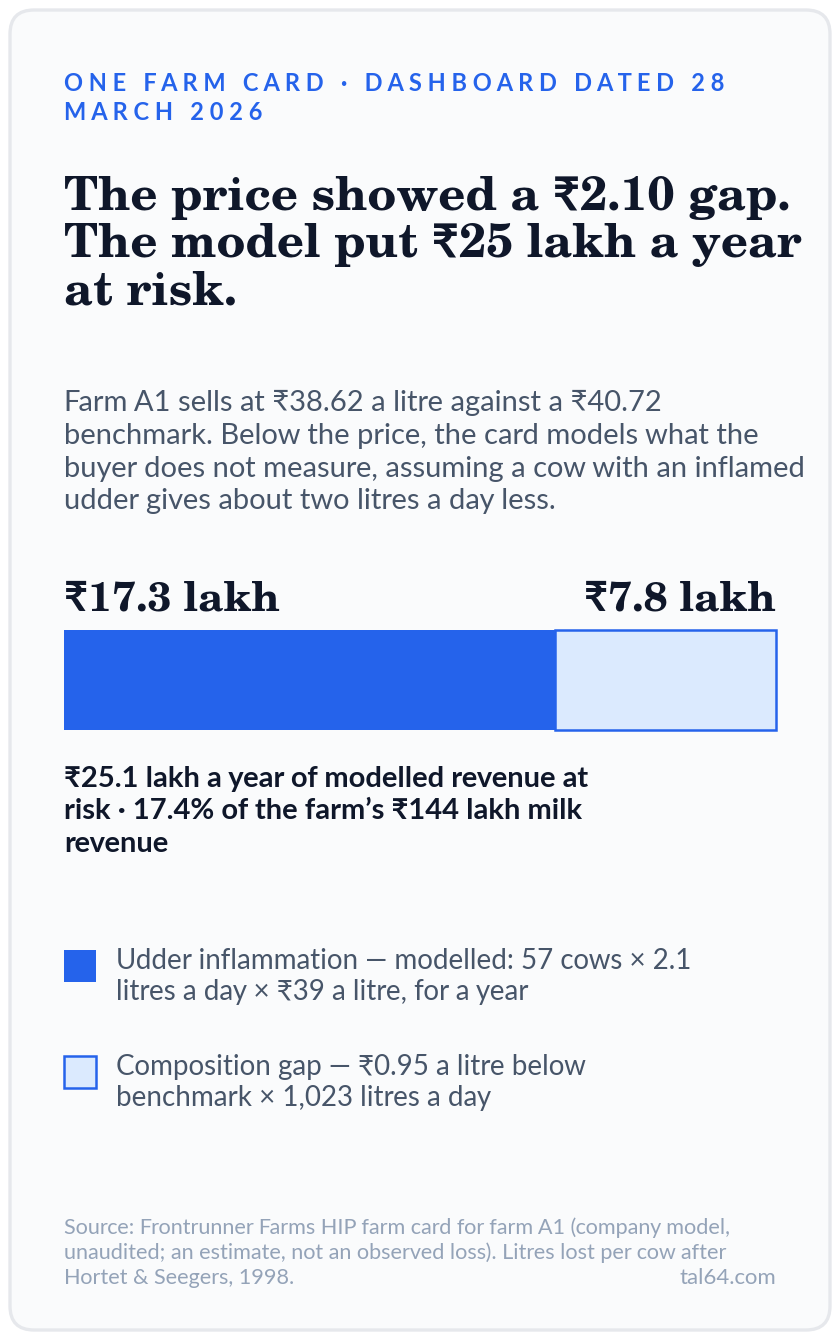
In April, a scorecard from Frontrunner Farms told him that his cows had inflamed udders. An inflamed udder gives less milk. Assume two litres a day less per cow, and across his fifty-seven cows the company’s model puts about ₹17 lakh a year of milk at risk. Add the price gap from the lost milk solids, and the estimated loss on the farm is about ₹25 lakh a year, a sixth of its revenue.
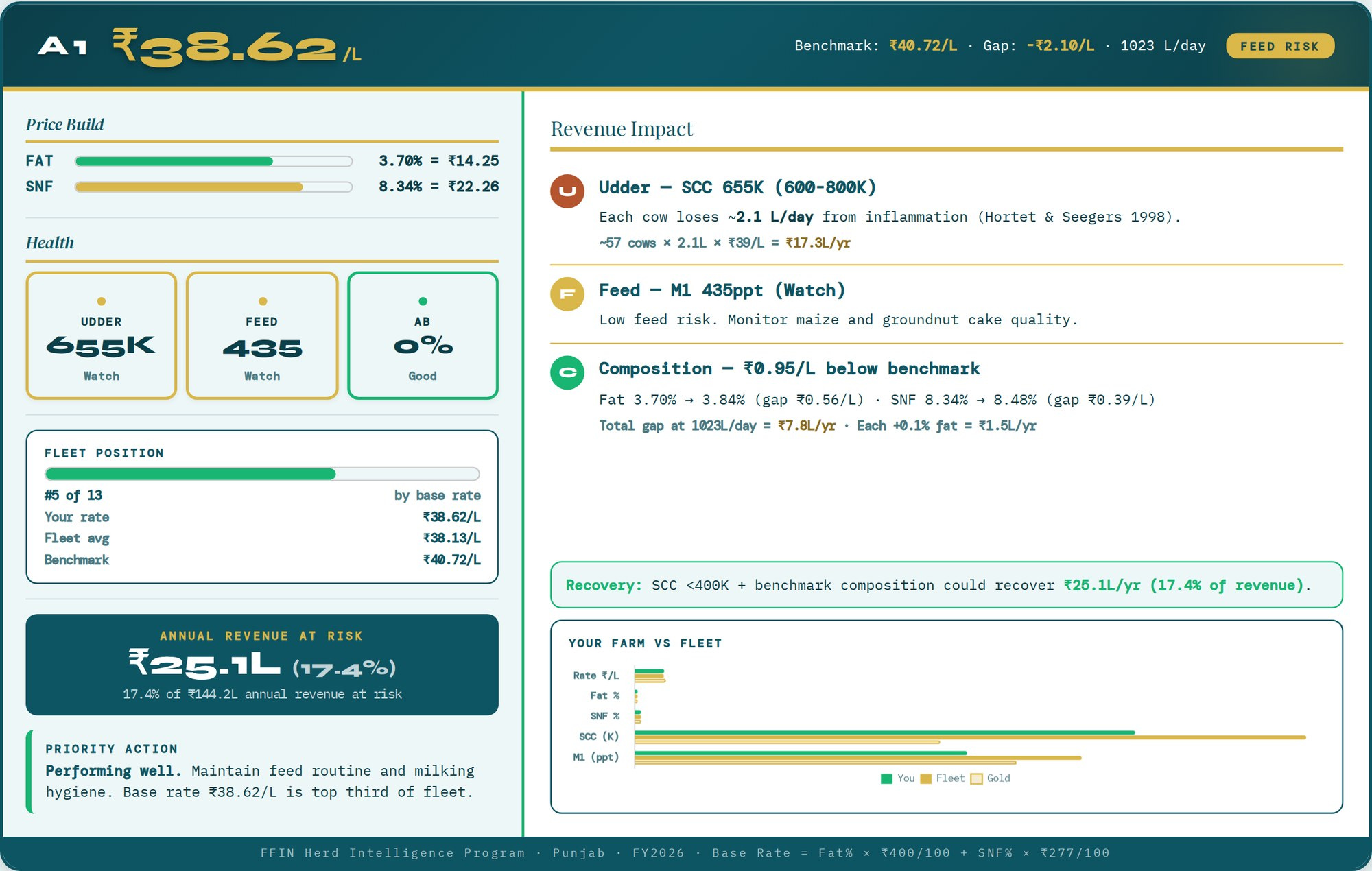
None of that shows up in his farm-gate price, which is set on fat and solids-not-fat. Pankaj Navani, who built the card:
“They look at composition. Nobody looks at quality. The system tests composition only, everywhere. It doesn’t test udder health. It doesn’t test the feed supplement you are putting in. We test for all of that.”
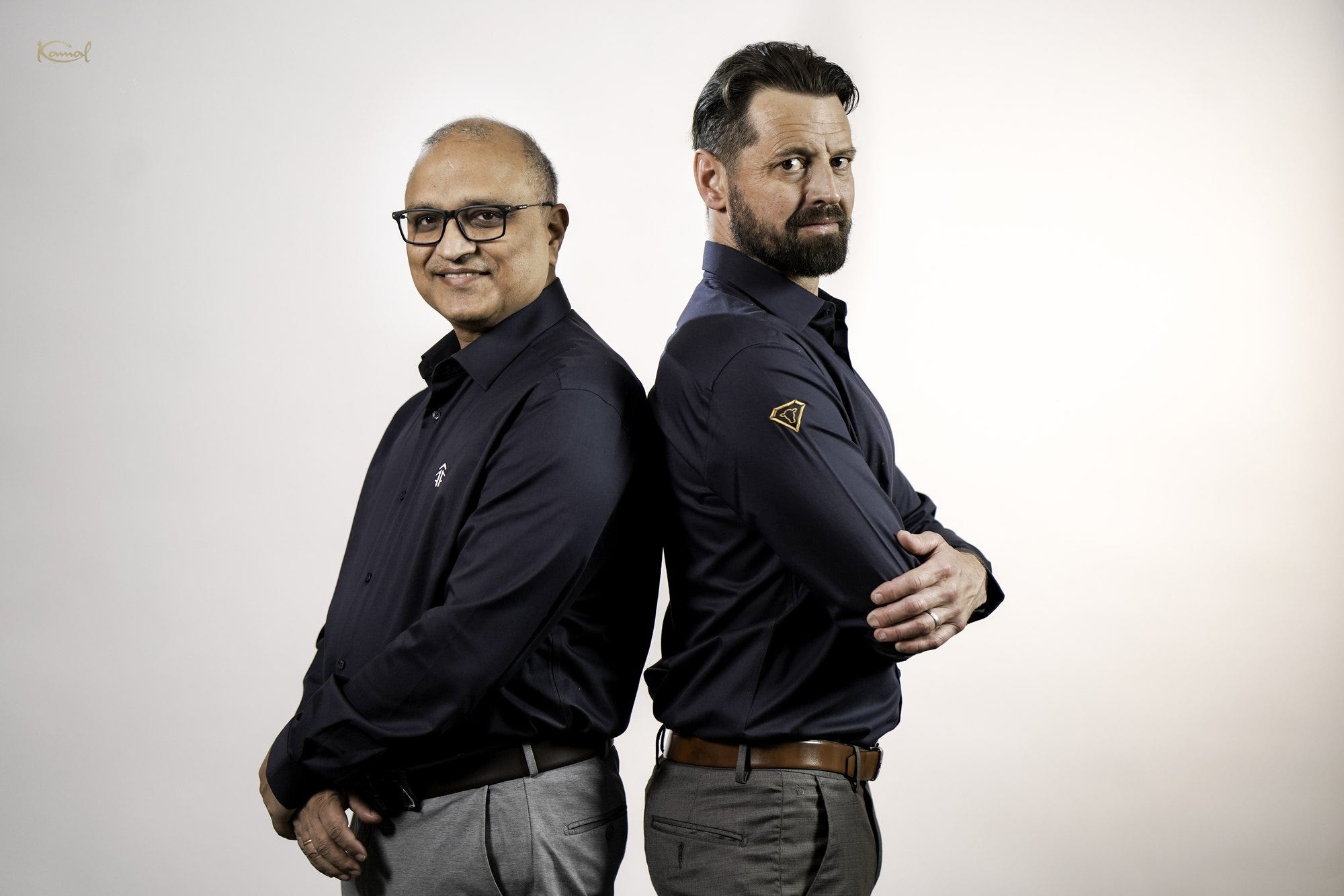
Pankaj Navani and Nicholas Tomkins, the founders of Frontrunner Farms, put that card in front of a few hundred of Punjab’s most professional dairy farmers on 4 April this year, at the veterinary university in Ludhiana where the company is incubated. One of the company’s own partners objected, in public. Nicholas, on the launch:
“The scorecard is where people go, oh. When we dropped it on three or four hundred farmers, we got hammered, because they hadn’t had time to wrap their heads around the implications of what we were saying, which was: there is a huge thing you have missed, and it is costing you a lot of revenue on your farm. That’s highly controversial. It was the worst product launch ever.”
Then farmers who had not been in the room started coming to them, to ask what it would cost to get the same card for their own herds.
Pankaj and Nicholas went to Punjab to find enough clean milk to replace imports for one buyer. The card came out of testing that milk every day, and it has become a paid service. Farmers already get individual reports; the dashboards that rank one farm against the next are still being built.
This is the story of how they got there.
A modeller and a builder
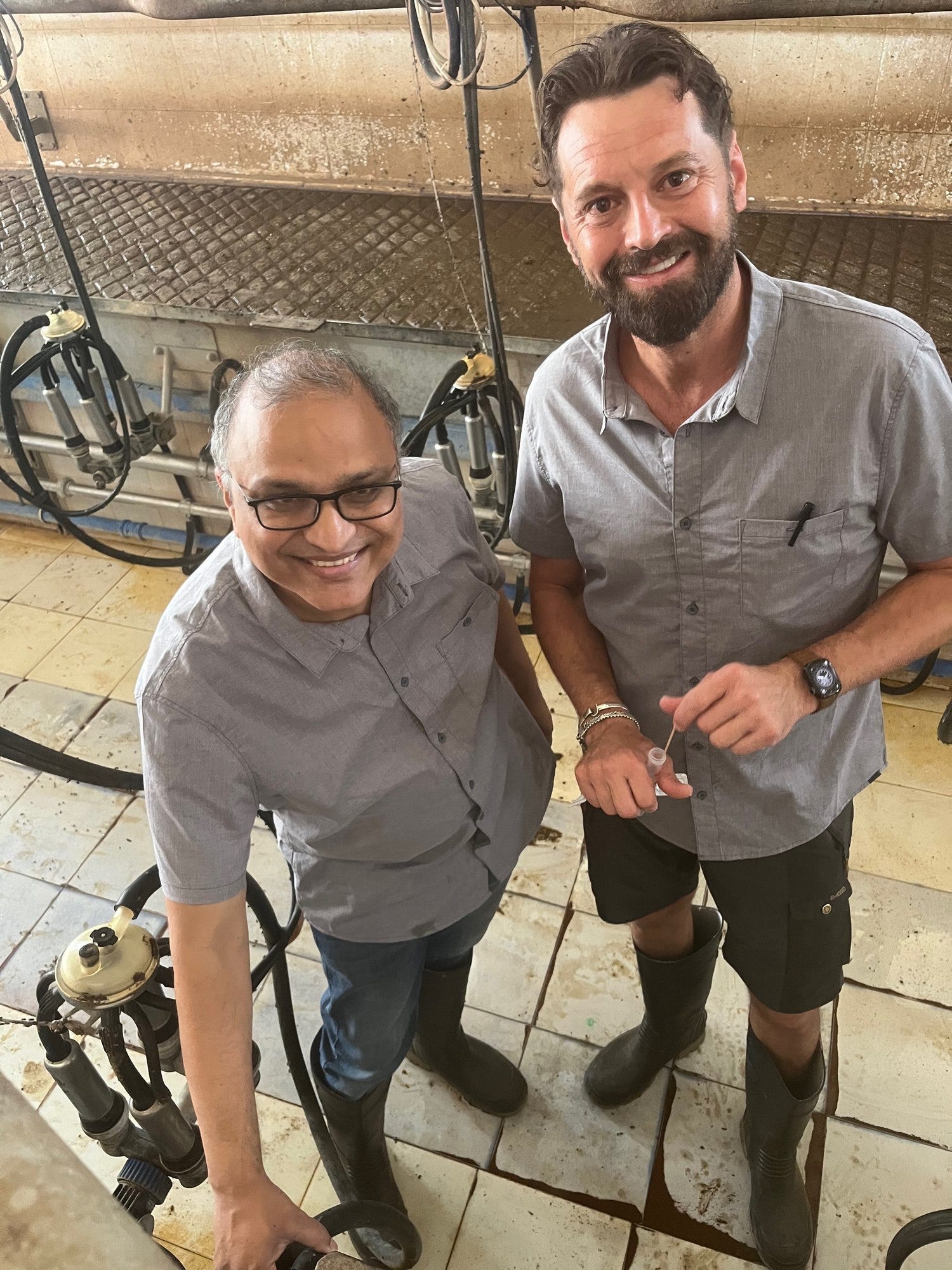
Pankaj is a computer engineer. Nicholas has spent his working life building: stone, farm sheds, a processing plant. By the launch they had spent nine months on the same farms, and they needle each other.
“He has no wrinkles. He has the face of a man who sat indoors. I have the face of a sailor.”
That is Nicholas on Pankaj.
Trevor Tomkins, Nicholas’s father, is the chairman. He is an animal scientist and investor who has worked on Indian dairy for more than a decade, and Pankaj calls him the grandfather of their industry. Trevor has been describing the problems in this article for ten years.
The flat land
Pankaj grew up in the Himalayas, the son of a physician, and wanted to leave.
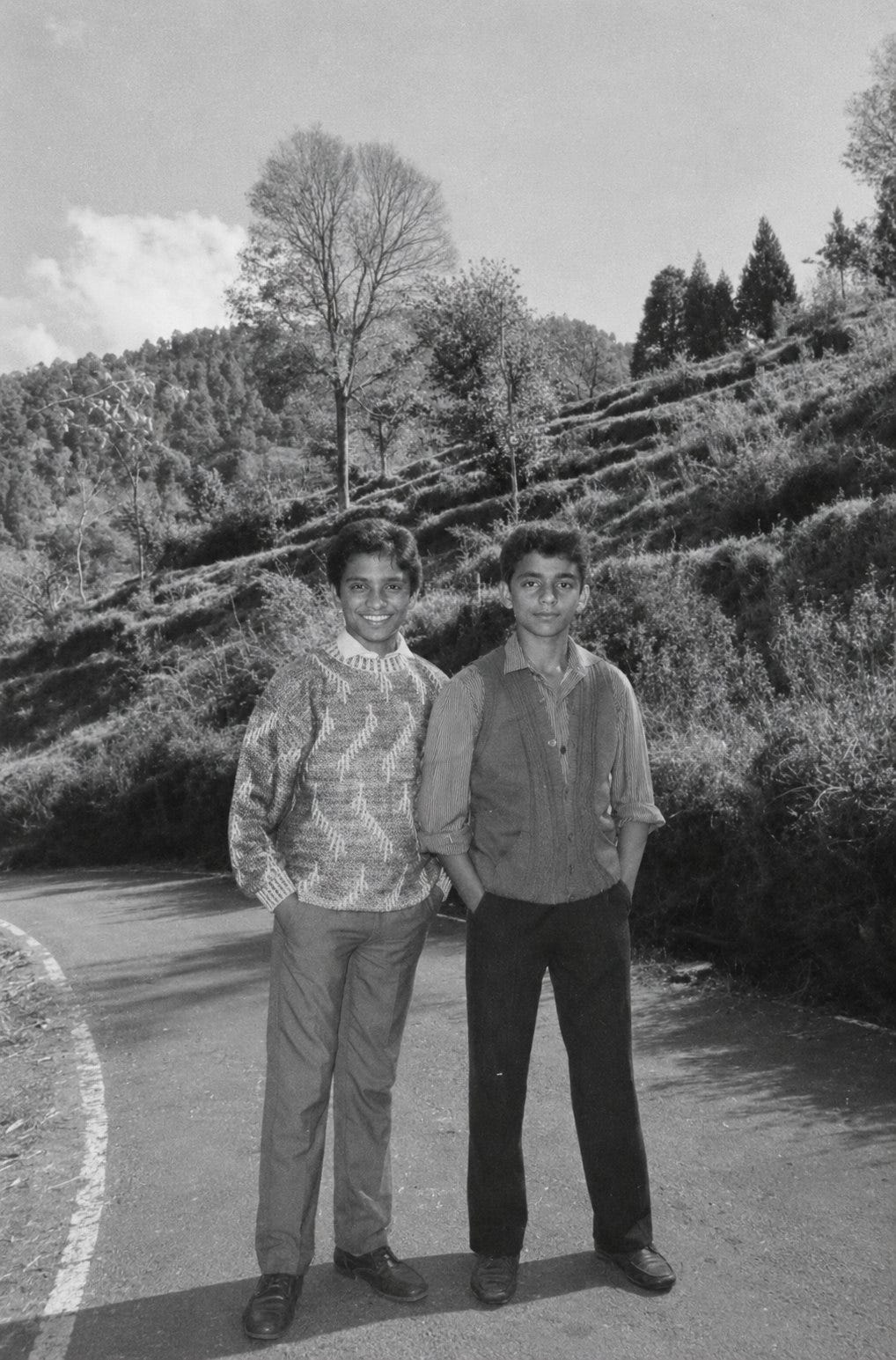
“When I was in the sixth class we came down to Delhi, and I always wanted to run away from it, because I never liked it. I had never realised such flat, vast land could exist. I am not joking—I had always thought the entire world was hills and mountains, with the Himalayas at the back.”
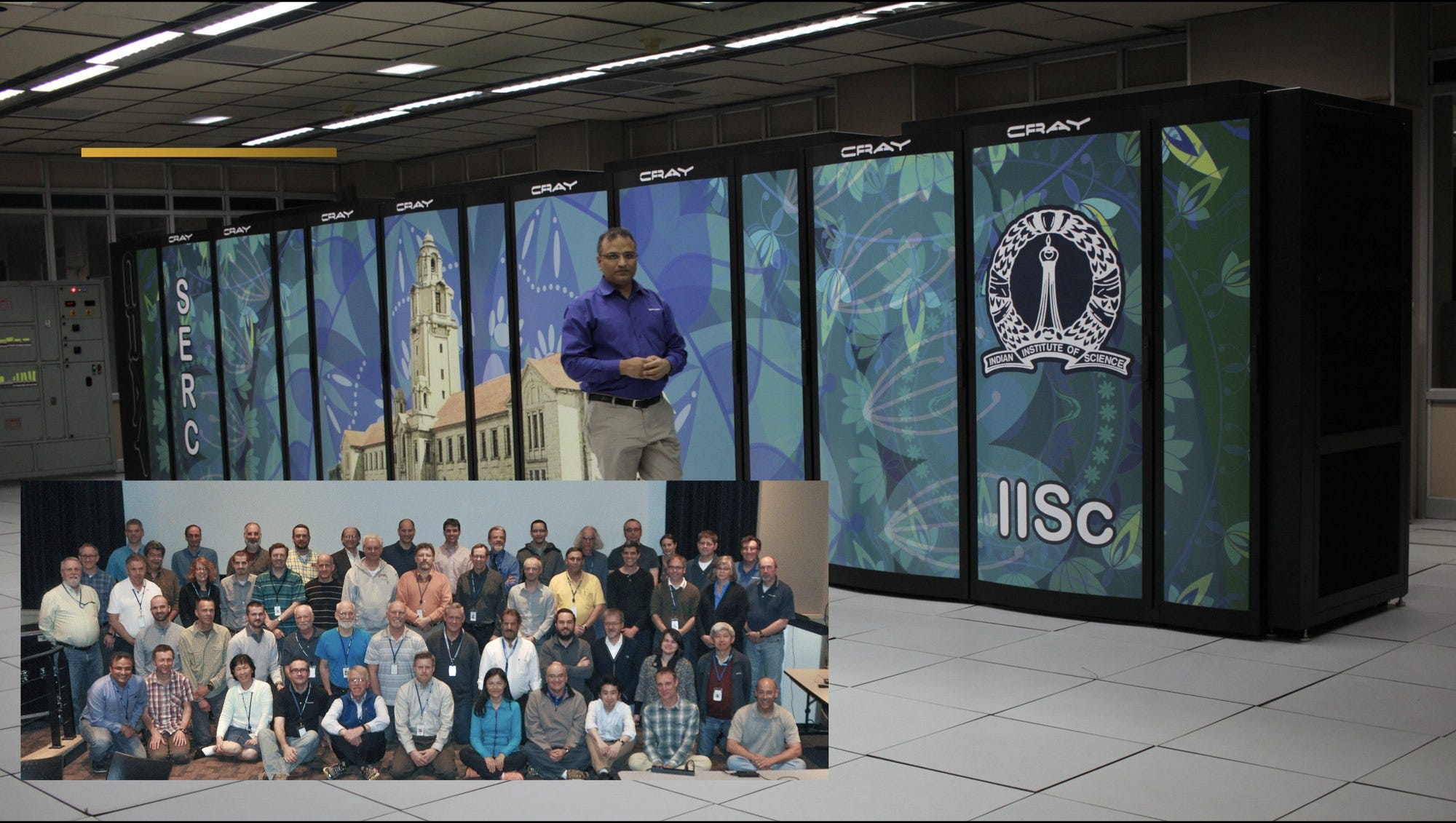
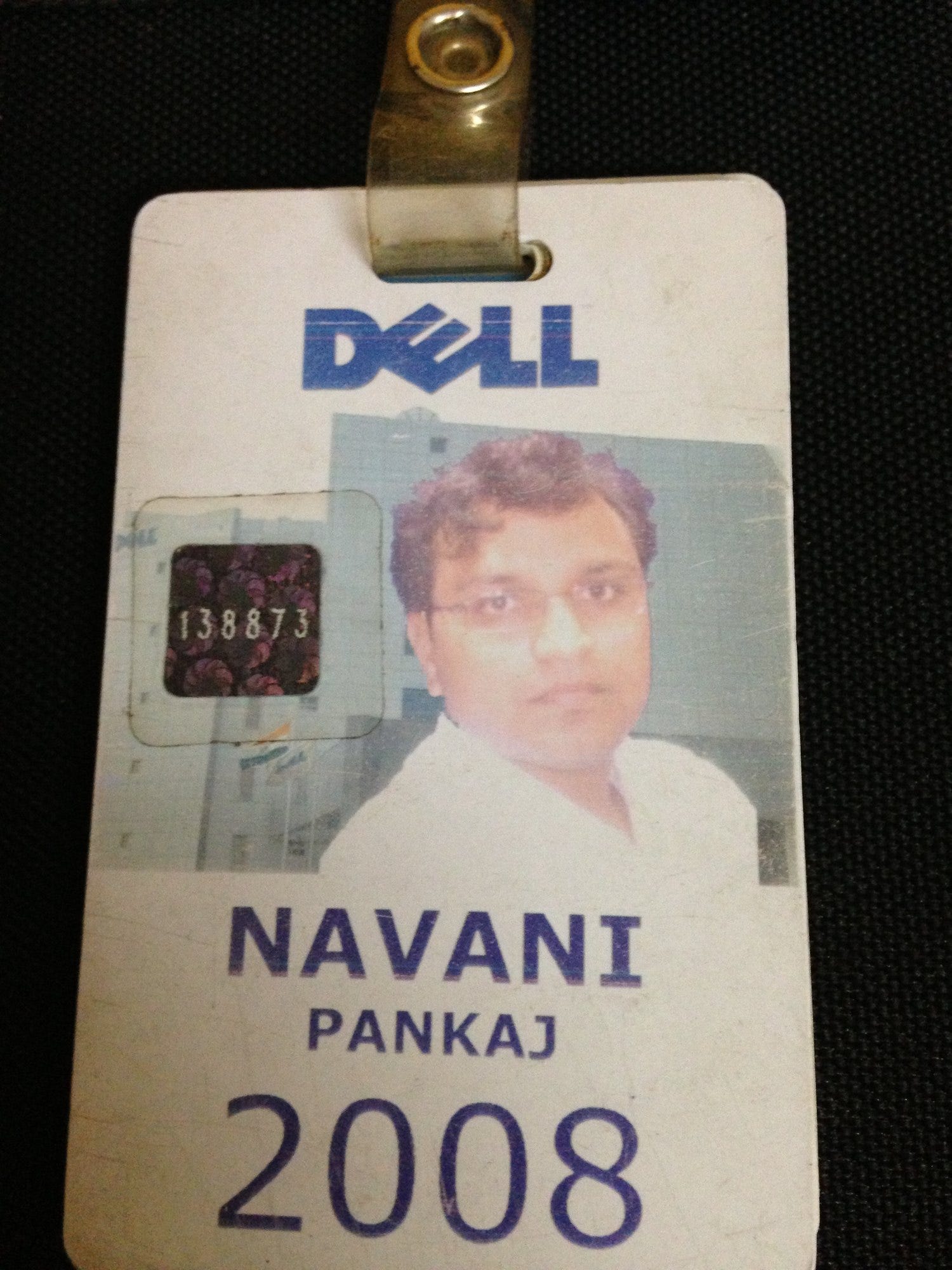
He went into computing. In 2003 and 2004 he built a supercomputer for the Institute of Genomics and Integrative Biology, a CSIR laboratory in Delhi: a four-teraflop machine for the arithmetic of decoding genomes, at a time when working out a single gene could take a laboratory years. (Editor: Pankaj remembers it as the fifth-largest supercomputer in Asia at the time. We could not verify the ranking. He was building scientific computing in India in 2003, when very few people were.)
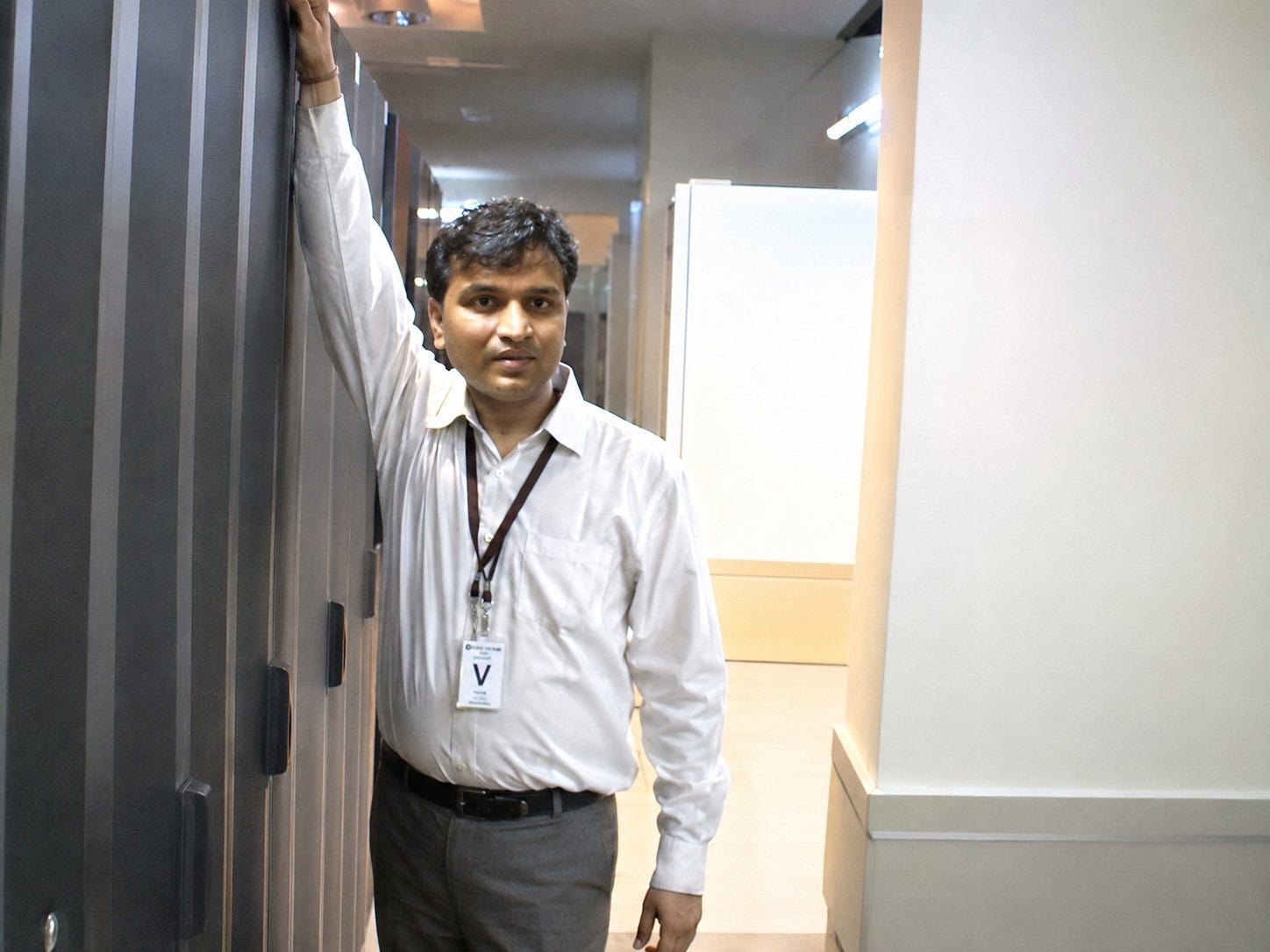
“Four teraflops today is maybe one CPU. But at that time, supercomputers existed in Singapore, Japan and Korea. China started building its own from 2009 or 2010, and then took a big leap. Fifty percent of patents used to come from the US, thirty-three percent from Japan, and the rest from Korea, Germany and the rest of the world. None came from India. None from China.”
He left computing at thirty-seven because of the people he had grown up with.
“I was thirty-seven. I grew up in the Himalayas and I never liked coming out of them. My father used to send me résumés every now and then, as everybody’s father does, and I felt useless to society, because I could not place those people anywhere near me. They had done higher secondary, most of them a BA degree, and I never had an opportunity to share anything with them. I thought I should work with villagers, so that I could work alongside them. Just as Shashi did.”
Shashi is Shashi Kumar, co-founder of Akshayakalpa, India’s largest organic dairy. Everything Pankaj has built since has been for villagers.
Binsar
In 2012, on a trek through Binsar in the Uttarakhand hills, Pankaj and a few friends got lost. A goatherd fed them and gave them a place to sleep. They went home, started a dairy, and named it after his village.
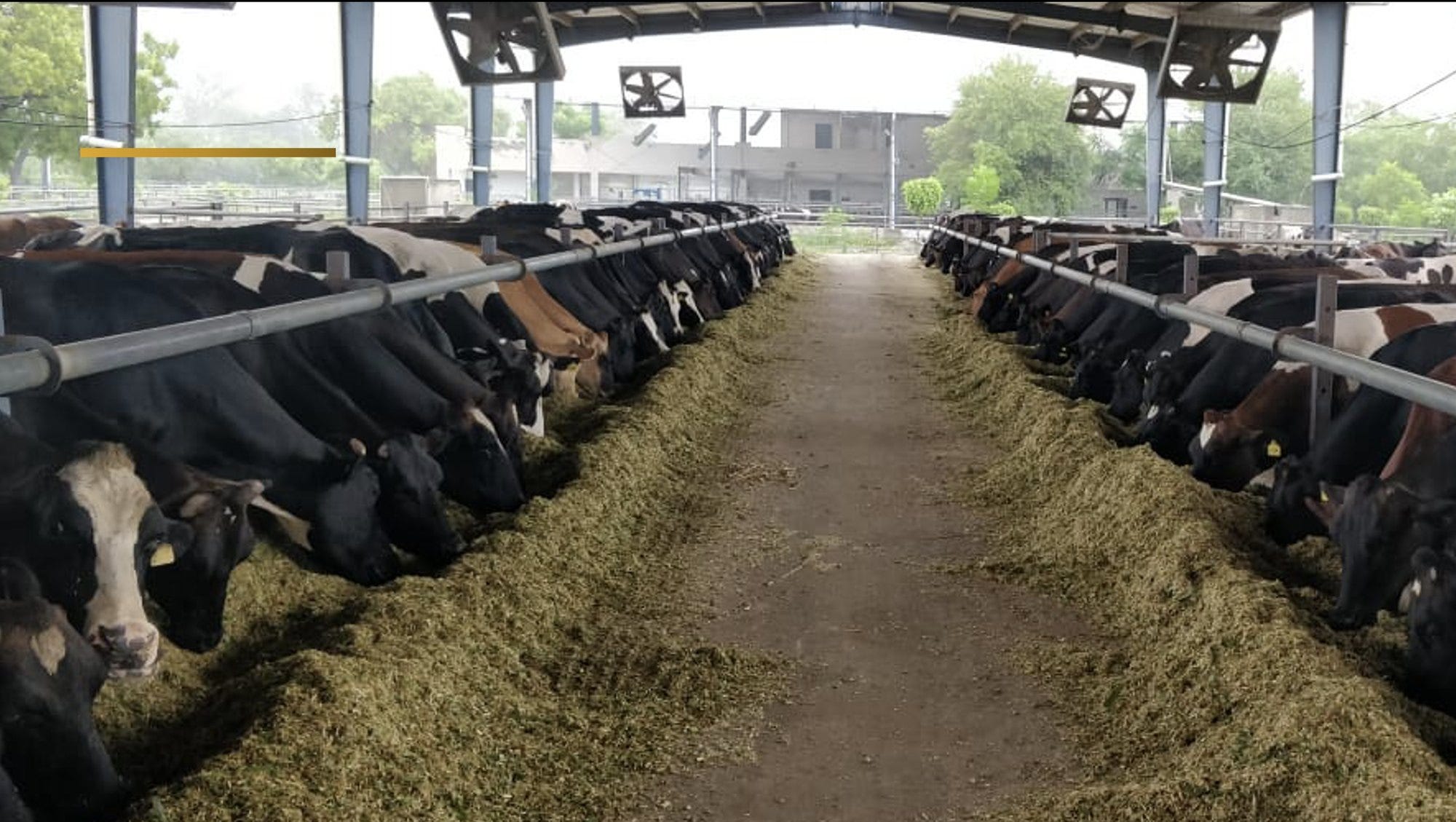
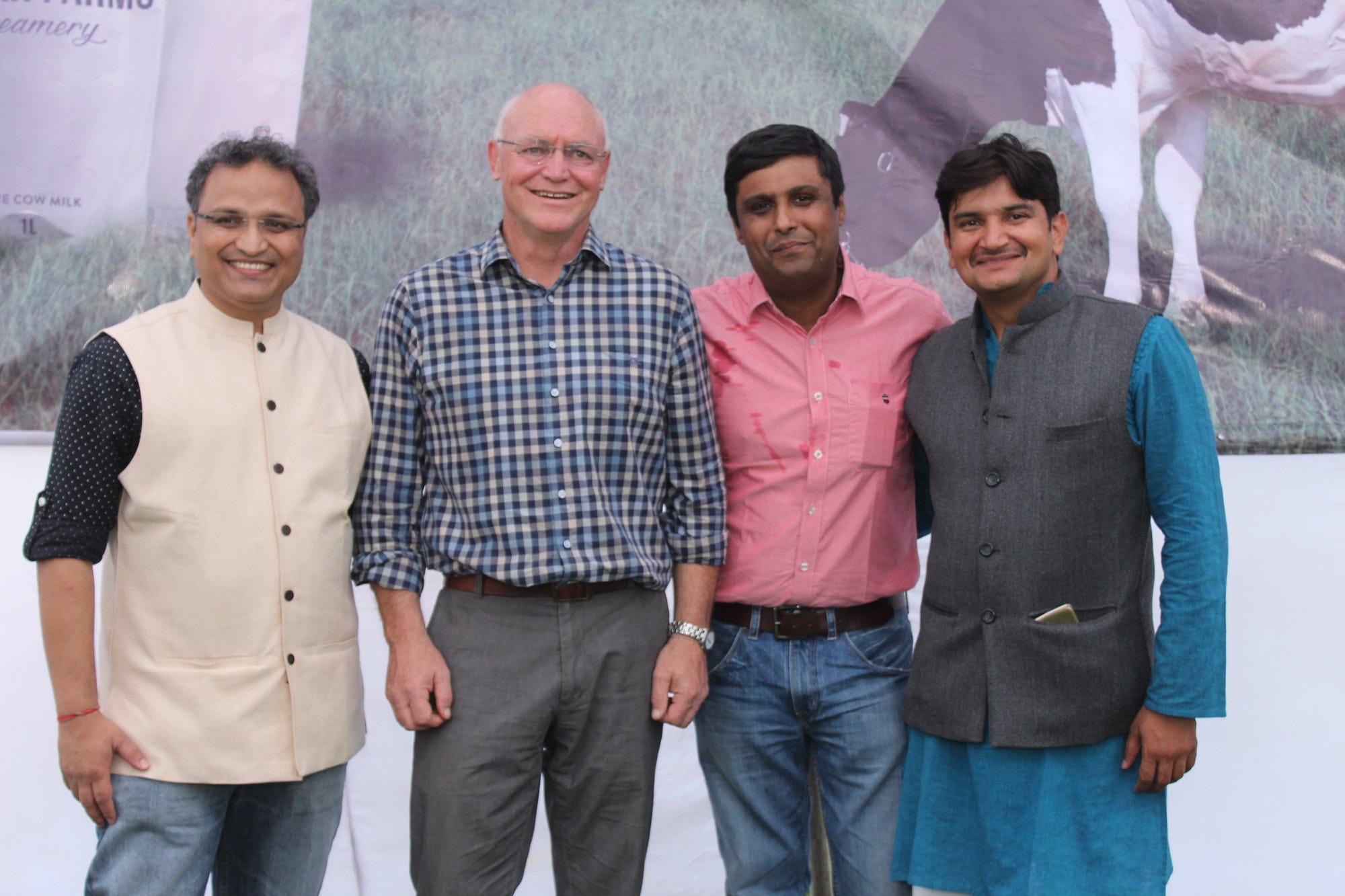
Binsar Farms grew to more than a thousand cows on a farm near the Delhi border. It sold undiluted milk in glass bottles, delivered to hundreds of families across the capital. One co-founder was Earl Rattray, a dairy farmer from New Zealand. Cow lameness on the farm ran at about one percent. Twelve or thirteen percent is common elsewhere.
Binsar produced clean milk for ten years and could not raise the money to grow. Pankaj left the management, and later the board. He is still a shareholder.
“I gave that project ten years. I couldn’t raise money, I took full responsibility, and I quit the venture—which means the management. When I had investors, they had other ideas, and we could not marry the two. Then I quit the board as well. So I am just a shareholder there. But my experience at Binsar is that we can produce such milk.”
Binsar could not raise money because an investor who buys a stake in a private company in India cannot be sure of finding a buyer for it later; the American market, where companies go public early and at high valuations, has no equivalent here. A working farm making clean milk could not find money that would wait ten years.
From prototype to platform
Nicholas Tomkins grew up in the American Midwest.
“I was two years old when we moved to the States, so I grew up there, in a rural environment, on a farm, around animals—primarily in Illinois and Wisconsin, the Midwest. That is where Trevor was working at the time. But I was fairly disconnected from that.”

He became a designer and builder, working in stone, and found that he could only sell his own hours.
“For me it was always: I can’t scale this, because I can’t scale myself.”
Stone brought him to India. A design-build contract took him to Karnataka, to work for a man who ran an ashram there and had married the daughter of one of Nicholas’s clients back home.
“He was being commissioned by Modi and the government to do India’s largest stone installations. He and I set up a studio together. I was learning from him about traditional carving, and he was learning from me about automation—because I brought him the lesson I hadn’t followed myself: you only really make money when you create something that can be prototyped and then sold again.”
“His work has been scanned digitally, and he can press print. He copies his homework.”
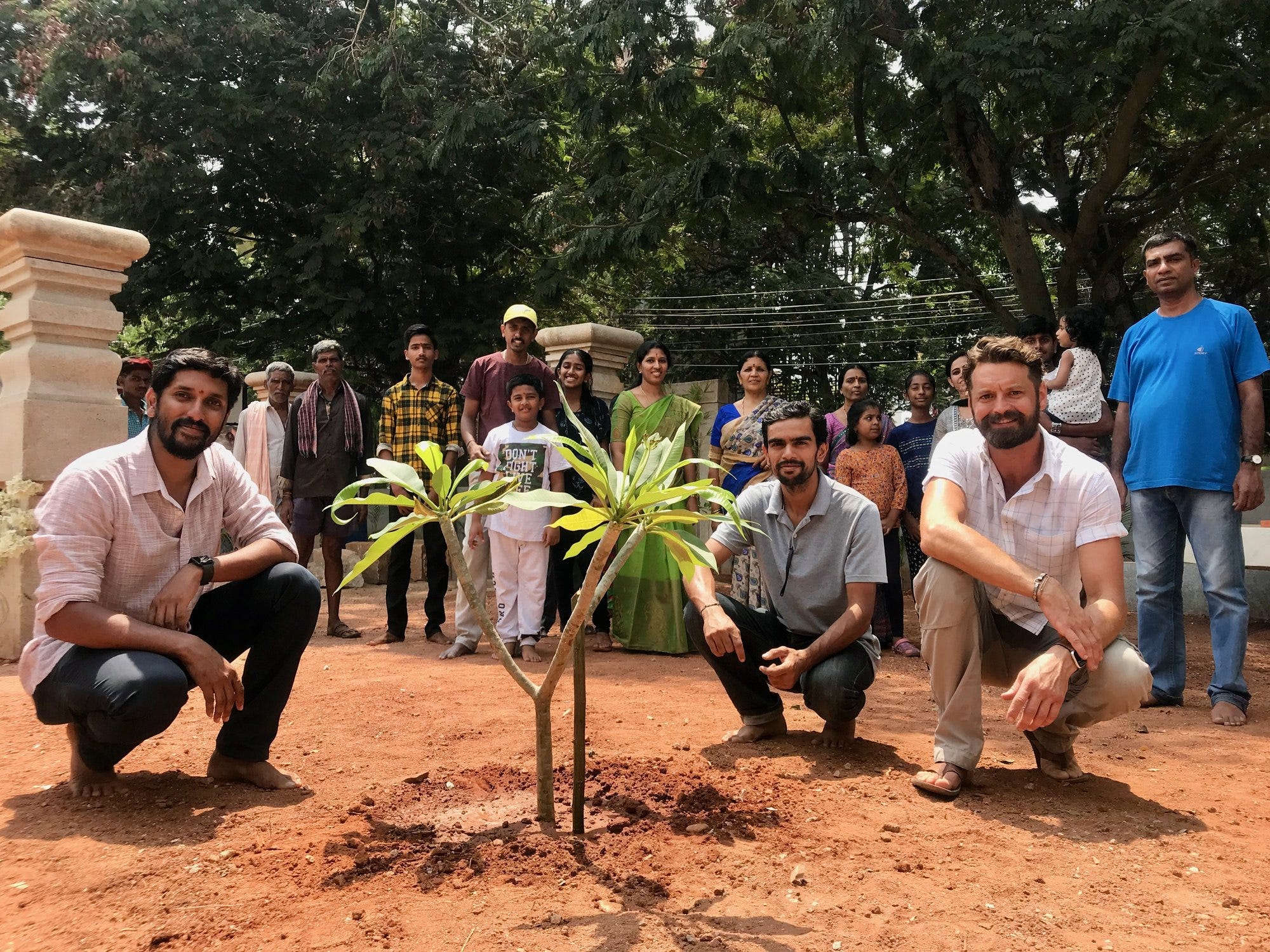
Akshayakalpa approached him through that circle. He ended up designing and building its milk-processing plant at Tiptur for Shashi Kumar.
“The reason it stuck was that Shashi and I spent a lot of time together, designing and building the processing plant in Tiptur, with Shashi’s mandates, which were: I want novel. I want something nobody has done before. If they tell you it can’t be done, figure out how to do it. Which is of course right up my alley.”
“I had never designed or built a dairy processing factory. But what I had done was design and build things that people had never done before. I think Shashi saw that I had the ability to take a problem that didn’t have a known solution and work backwards.”
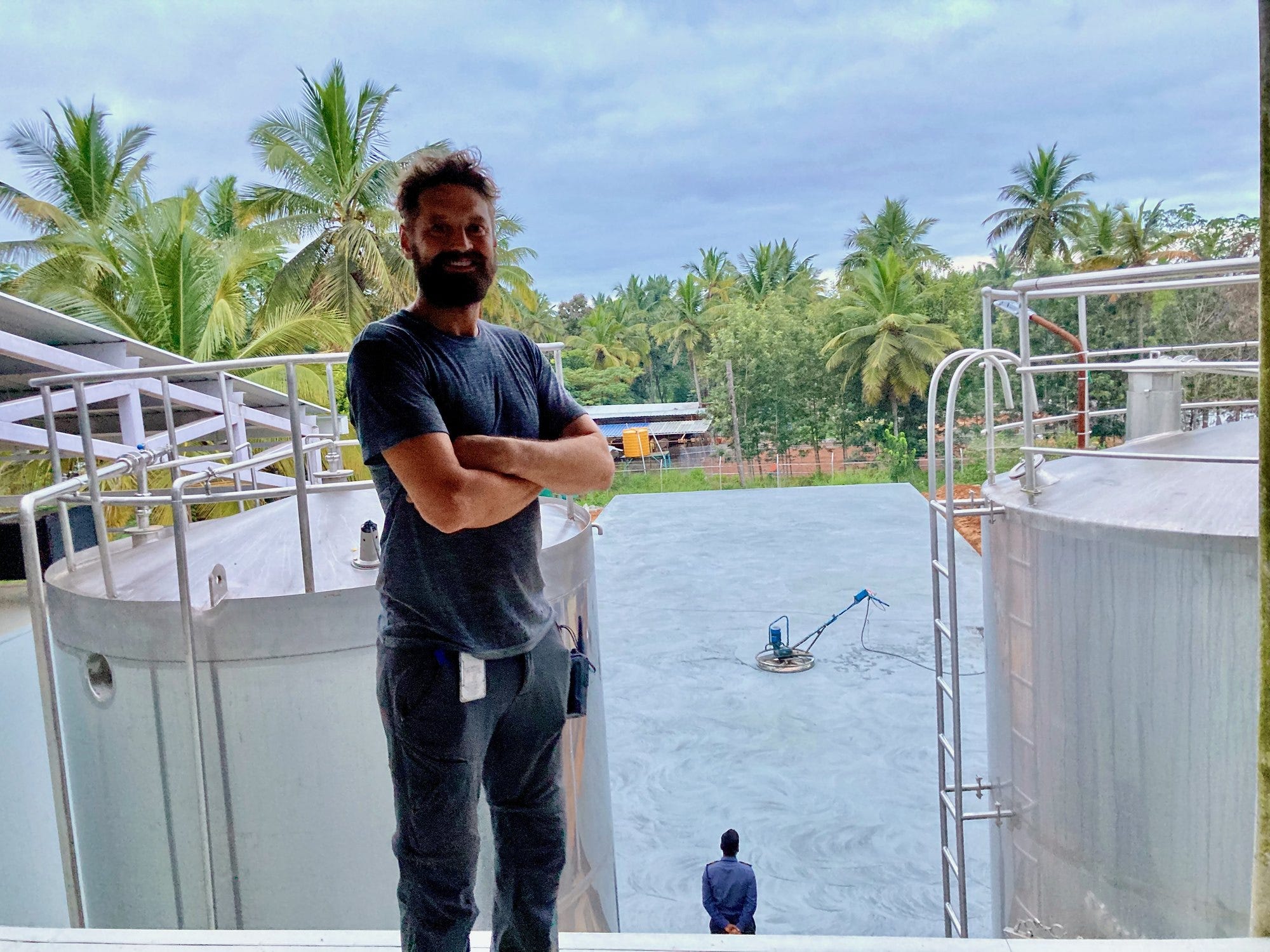
He says he works the same way at Frontrunner.
“Whenever anybody has come to me and said we can’t do this, I’ve always said: yes you can, but we have to think outside the box. And in India it’s not that hard to think outside the box. You just have to stop doing what has always been done. First, how do we not do what everyone else does? And then, how do we build systems around that? How do we design systems around the problem?”
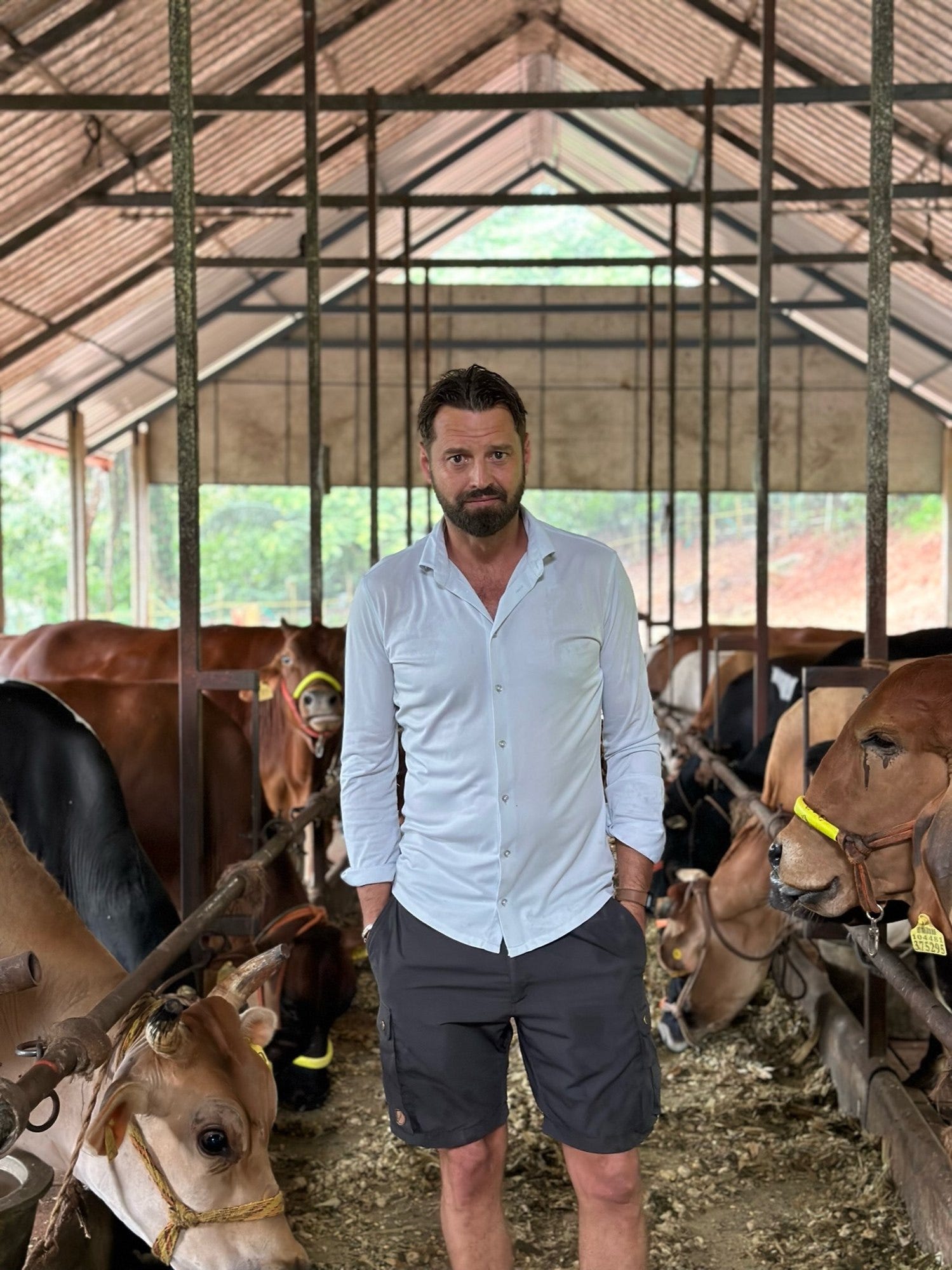
Half a sixpence
Frontrunner is partly Trevor Tomkins’s idea.
Trevor learned dairying as a boy on his grandfather’s farm in England, after his father, an airline pilot, was killed in a crash when Trevor was eight. He took a PhD in animal science, was sent to America on a one-year assignment, and stayed.
He ended up running Milk Specialties, a milk-protein company that was losing $3 million a year on $53 million of sales when he took over in 1996. Fifteen years later its sales were approaching half a billion dollars. (Editor: the company, now Actus Nutrition, reports revenue above $1.5 billion.)
In 2011 he sold his shares and founded Venture Dairy with his former CFO. The firm looked at dairy in Central America, Vietnam, East Africa and India, and in each found small farmers cut off from the market.
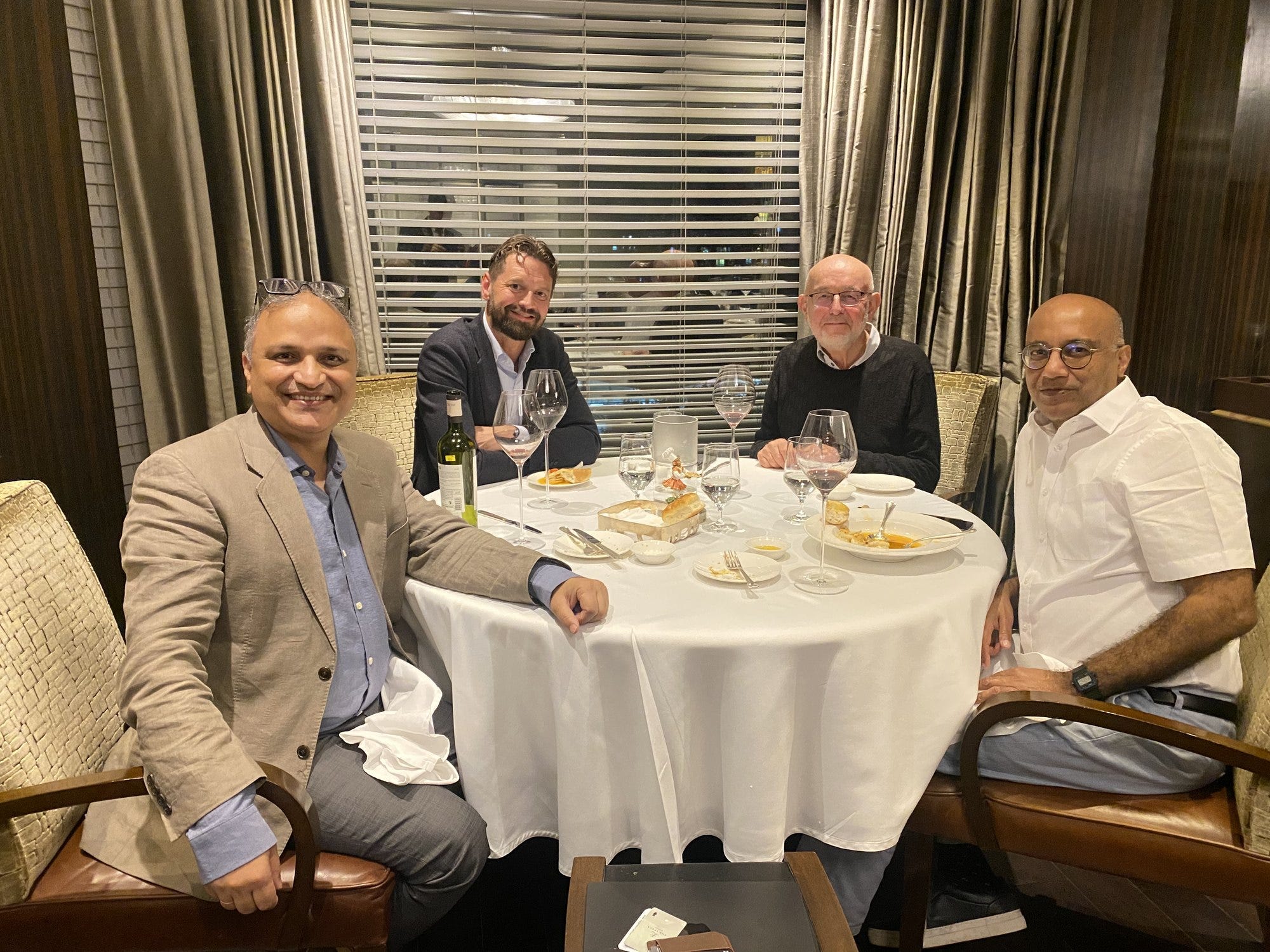
The lesson Trevor cites most often came from his grandfather. As he told this publication last year:
“The most valuable lesson I ever had in my life was probably from my grandfather: always leave half a sixpence on the table. I have seen so many greedy people in business who want to drive the last rupee out of a deal. Business must be win-win: you leave the table happy, and I leave the table happy.”
Venture Dairy made its first Indian investment in Akshayakalpa in 2013 and kept investing while the company was small. It has since invested in Frontrunner Farms. Trevor is the chairman and put in seed money himself.
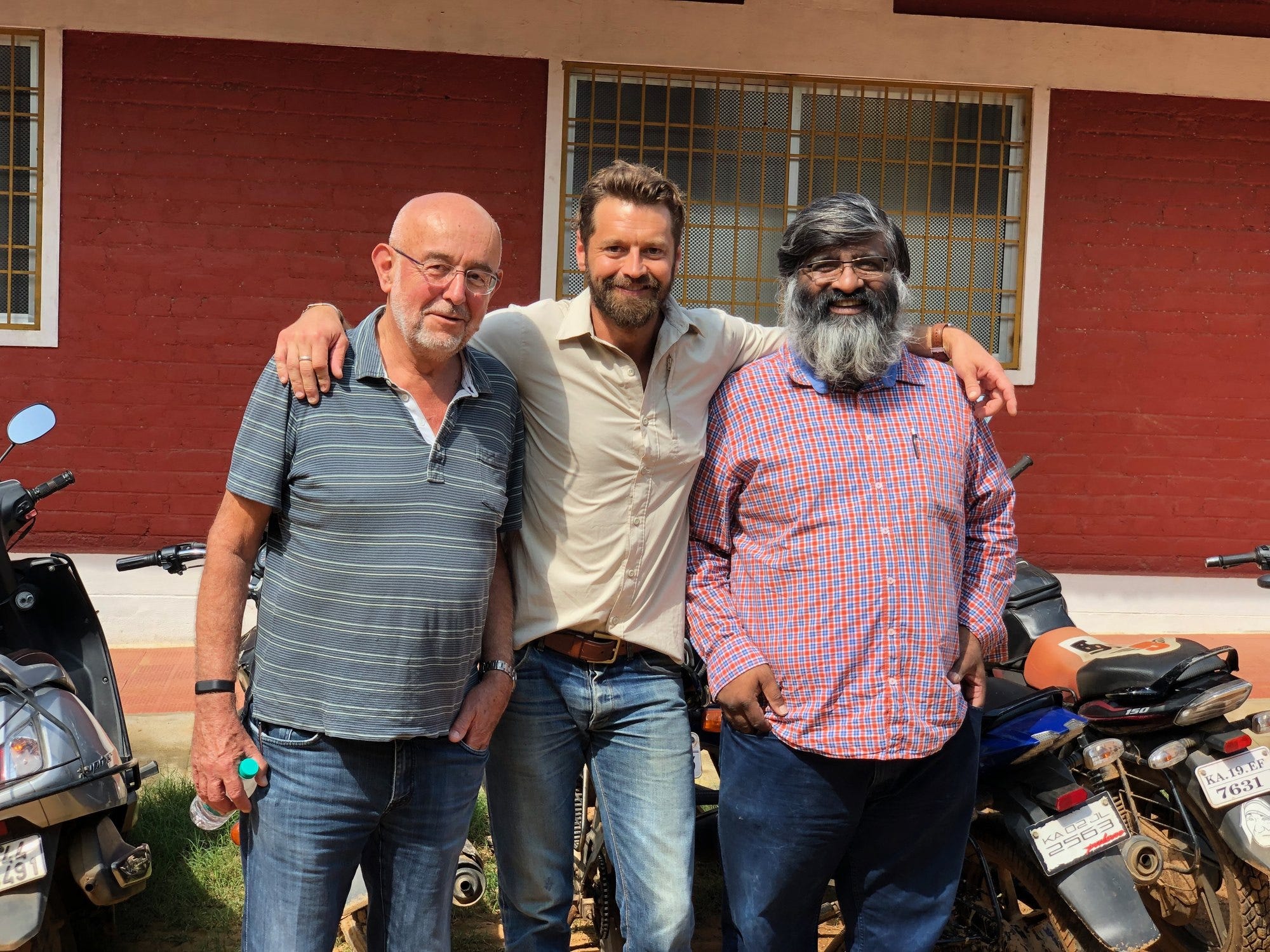
Trevor’s other argument is about the size of India’s herd. The country keeps too many animals and feeds them too little, he says. Take the average cow from three litres a day to fifteen or twenty, and India could cut its herd from 180 million animals to 50 million and feed those properly. Frontrunner works with the larger, better-managed herds.
Frontrunner charges consumers no premium, and it insists the farmer should come out ahead for cleaning his milk.
Eco-apartheid
At Akshayakalpa, Nicholas saw what constant attention to a farm does for its milk, and how hard that attention is to keep up as the number of farms grows. He supports organic farming, and he thinks milk that depends on a premium price has a cost of its own.
“As much as I support organic farming in general, I also believe it contributes to what in the West we sometimes call eco-apartheid. Great if you can afford it—then you can choose to buy the right thing and support ethical farming practices. But if you’re poor, it’s not for you.”
When the first news of Covid broke, Shashi began booking processing capacity at other facilities, so that no single plant could stop the company. When the lockdown came, Akshayakalpa had to switch off its app because it could not serve the demand.
Nicholas was the engineer inside the plant then. He credits the fear of depending on one plant for the processing relationships that carried the company through.
“It was because of that fear that the relationships were developed, and then we used those relationships for outside processing—which is what allowed Akshayakalpa to stay available to consumers in that moment.”
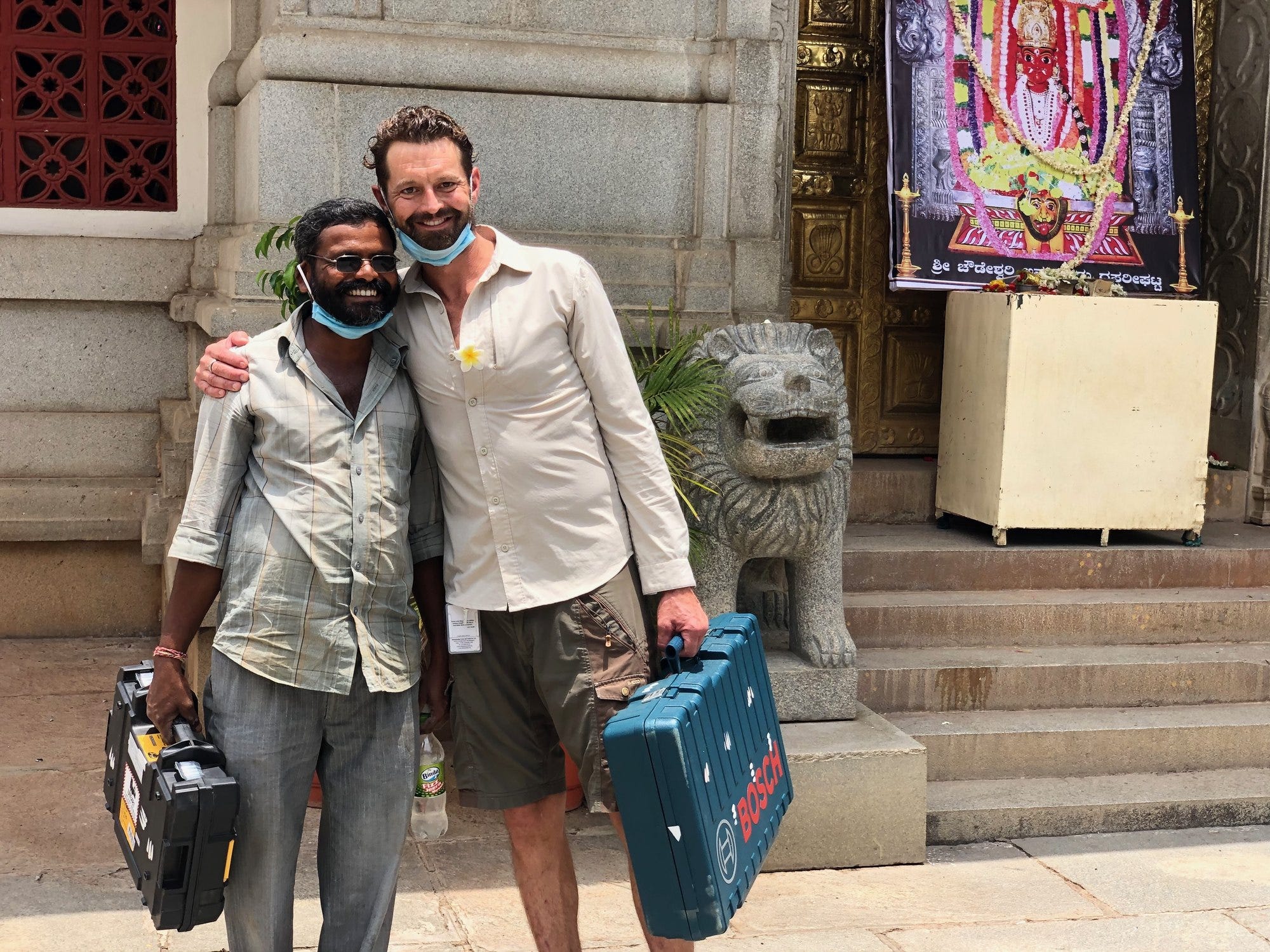
Akshayakalpa could only buy milk from its own certified farms, which kept its quality through the year. Frontrunner wants tested milk sold at the ordinary price.
“At Akshayakalpa, we built a system in which consumers paid a premium over the other options in the market to get high-quality, nutritious milk. We began to ask ourselves: how can we make this more accessible now?”
In Indian dairy, the farm-level support that Akshayakalpa did well is called extension. Nicholas thinks the word has been misused.
“The extension services we have at Akshayakalpa are different from what the term means in the rest of India. Other people talk about extension here, but what they mean is sales.”
“Extension is academics going into the field, extending academic understanding and current science on any given thing—which is the model Akshayakalpa focused on. In dairy, that means PhDs, graduates, undergraduates and doctors going onto farms.”
“And we add implementation. It’s not just the current science; it’s here is how you can apply it, and here are the types of products that might support that. But we’re agnostic. This is the information.”
The company runs field trials of its own: toxin binders against aflatoxin in feed, and, with its partner, a systemic-enzyme trial for udder health. It says the trials are there to learn what works in Indian farm conditions. It sells no feed inputs.
Indian farmers buy inputs in a market where every seller makes claims and nobody checks them.
“Because inputs are a wild west, there’s no trust in that sector. No one has any reason to trust anyone, so no one trusts anyone, and then no one knows which advice to follow. Farmers end up guessing—or doing what their neighbour did, or not doing what their neighbour does because they don’t like their neighbour.”
Frontrunner’s bet is that a company can stand between the science and the farm, sell no inputs, and be paid for advice a farmer can check against his next test.
The founders call that ground the missing middle: everything between the cow and the plant gate, where health, feed, treatment records, milking routine and chilling decide what the milk is. Nobody in Indian dairy, they say, has wanted to work there.
December 2024
Pankaj and Nicholas met in December 2024.
“Nicholas was—not frustrated, but something like it. He had been exposed to the South Indian way of farming: small, small batches. And I was waiting for something, because I had left Binsar at the time of Covid.”
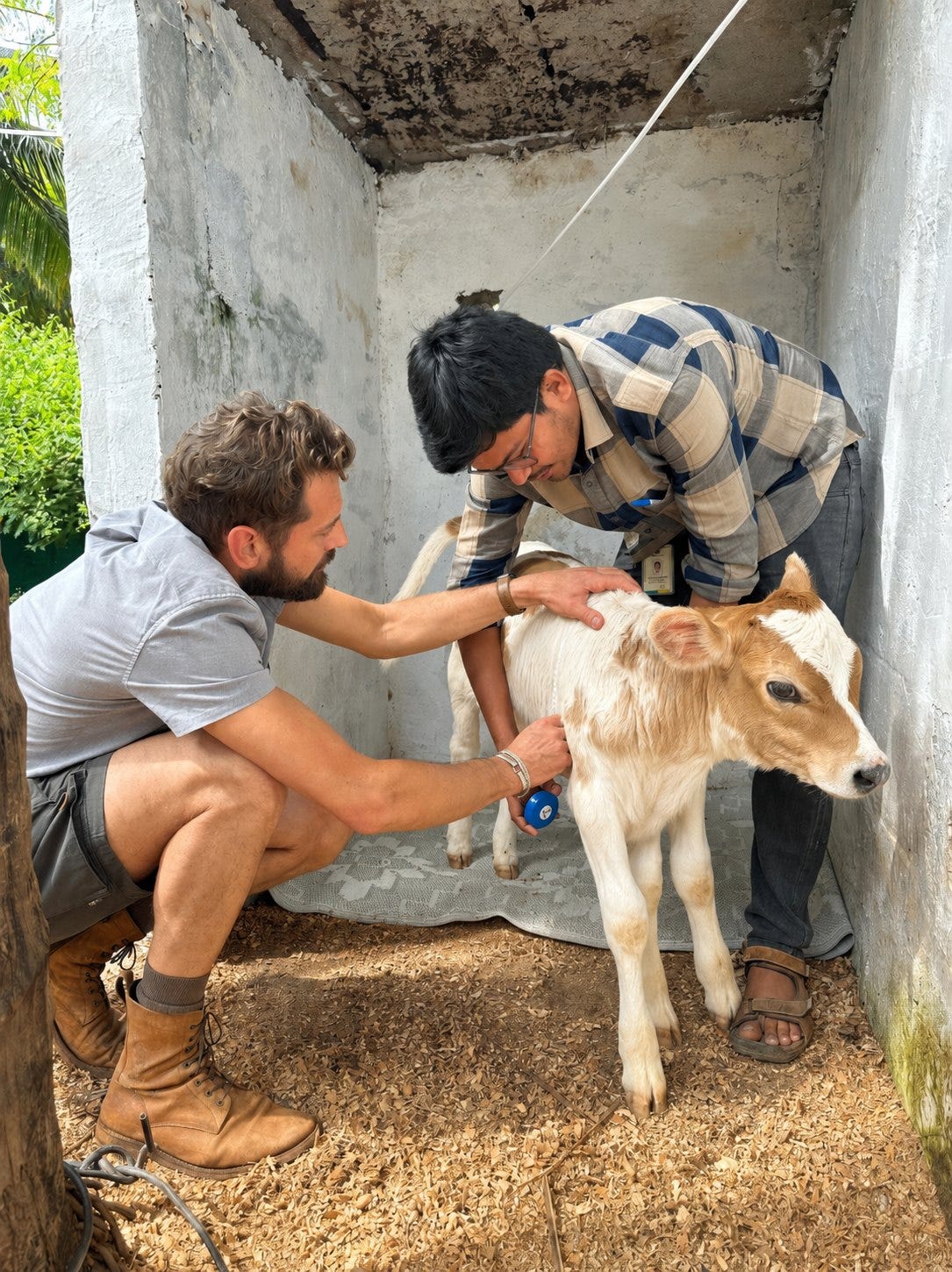
Nicholas had also, by then, put money into an earlier dairy venture in India, and learned from it how much he had to learn about doing business here.
“It’s really tough to come here and do business if you don’t spend time understanding how business is done here. And that’s an understatement, because there are so many layers of complexity.”
They began with a buyer. A processor in India needed milk clean enough for infant food and could not get it.
“You can spend money fixing a social problem, but you have to build an economic engine around it. The engine we proposed was: we need infant-grade milk. That justifies what it is going to cost to clean this milk, because it will fetch whatever we ask for it. Nobody is competing with us; nobody else can provide it. So we set the market. Here is what we bought it for. Here is what the intervention costs. Here is our profit. Here is what you are going to have to buy it for—you work out what you are going to sell it for. It was a simple, straightforward proposition, and our potential customer accepted.”
(Editor: the identity of that customer is confidential at the founders’ request.)
They went to Punjab because it has the most commercial dairying in India: large herds, professional owners, money. They expected to find a system that needed small corrections.
“We were under the impression that we were going to walk into a fairly advanced production system and find that not a lot of correction was needed. Instead we walked in and found that large professional farmers in India produce a larger volume of worse milk. That’s the strange conundrum. As you move towards professionalisation, you get a higher volume of dirtier milk.”
The farmers had never been given a reason to look beyond fat and solids.
“The cows are producing milk fine. But nobody ever said: you should just check the oil. Nobody had ever told anybody that what makes milk valuable is its composition—not just fat and SNF, but all the other things.”
Check the oil
The buyers pay for fat and solids-not-fat. Bacterial count, antibiotic residues, somatic cell count, which marks udder infection, and aflatoxin M1, a carcinogen that passes from mouldy feed through the cow into her milk within a day, may be checked somewhere down the chain. The farmer never sees those results, and none of them changes his price.
“Internationally, that’s how it’s done too—on composition. But that’s because internationally we don’t have to look at things like bacterial count, antibiotics and M1. They’re a given. It’s like buying a car: all four wheels are there.”
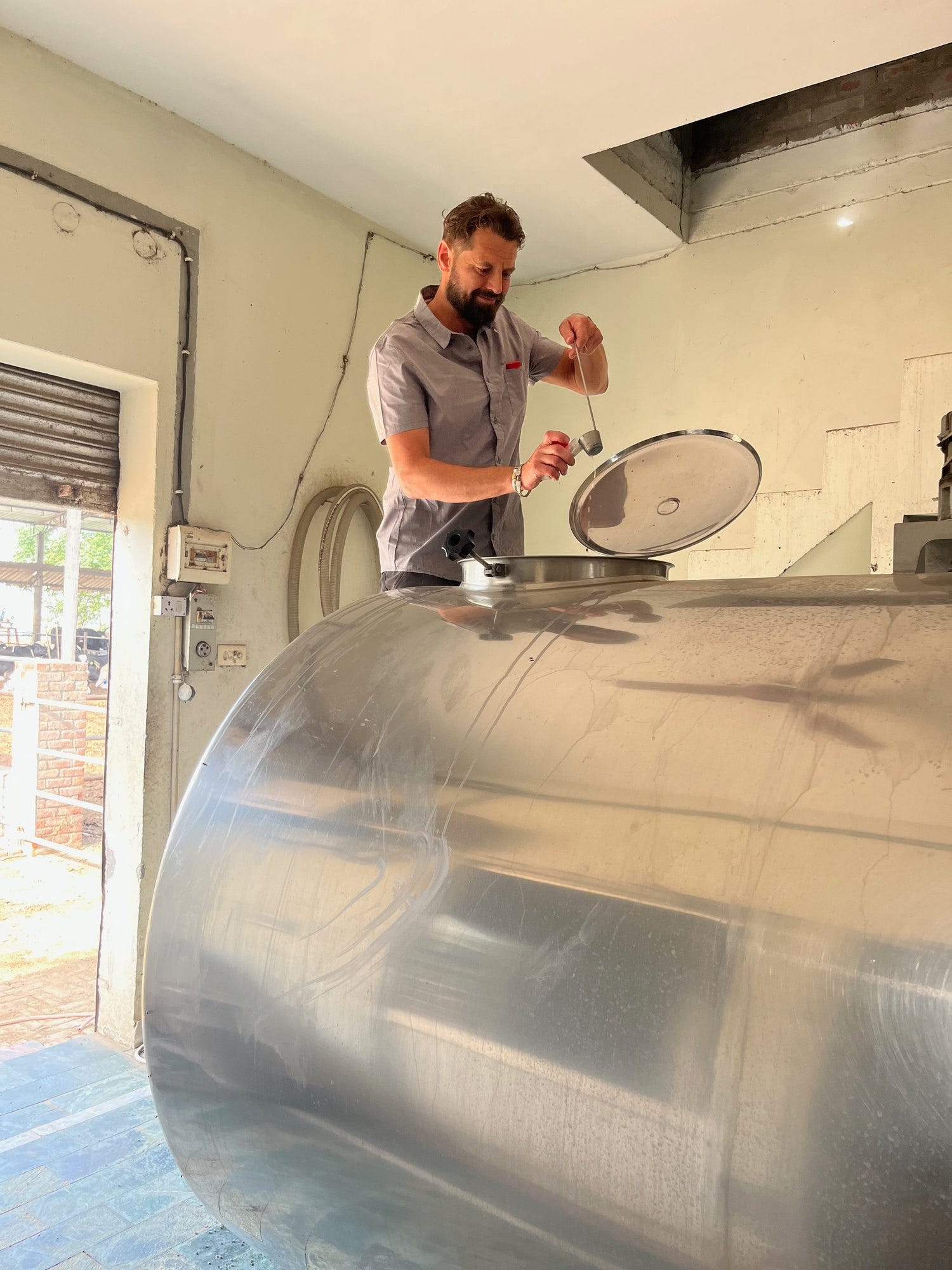
Indian studies of farm and raw milk have repeatedly found aflatoxin M1. One survey of retail milk in Chhattisgarh found it in a third of samples, nearly half of those above the European limit. There is published research on aflatoxin risk in milk from Ludhiana, where Frontrunner is based.
The Food Safety and Standards Authority of India ran a national milk survey in 2018 and concluded that milk was largely safe: 5.7 percent of samples breached the aflatoxin limit, and adulteration was rarer than press reports suggested. Frontrunner runs more tests on professional Punjab farms and gets a different result.
“We did that study in Punjab. About eighty to eighty-five percent of the samples failed.”
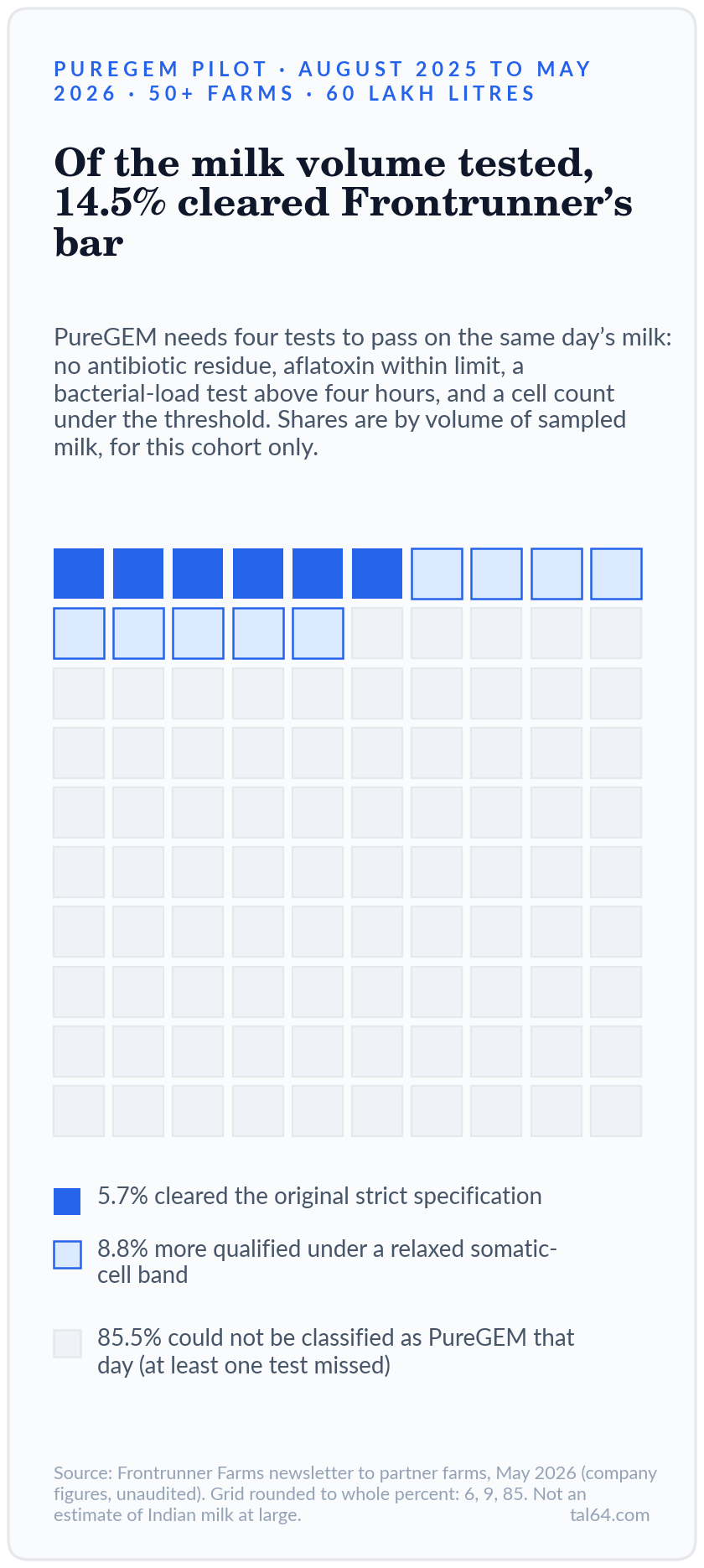
The company has since published the figures behind that estimate. In a newsletter to its farmers in May, it reported nine months of testing, from August 2025, across more than fifty commercial farms and more than sixty lakh litres of milk.
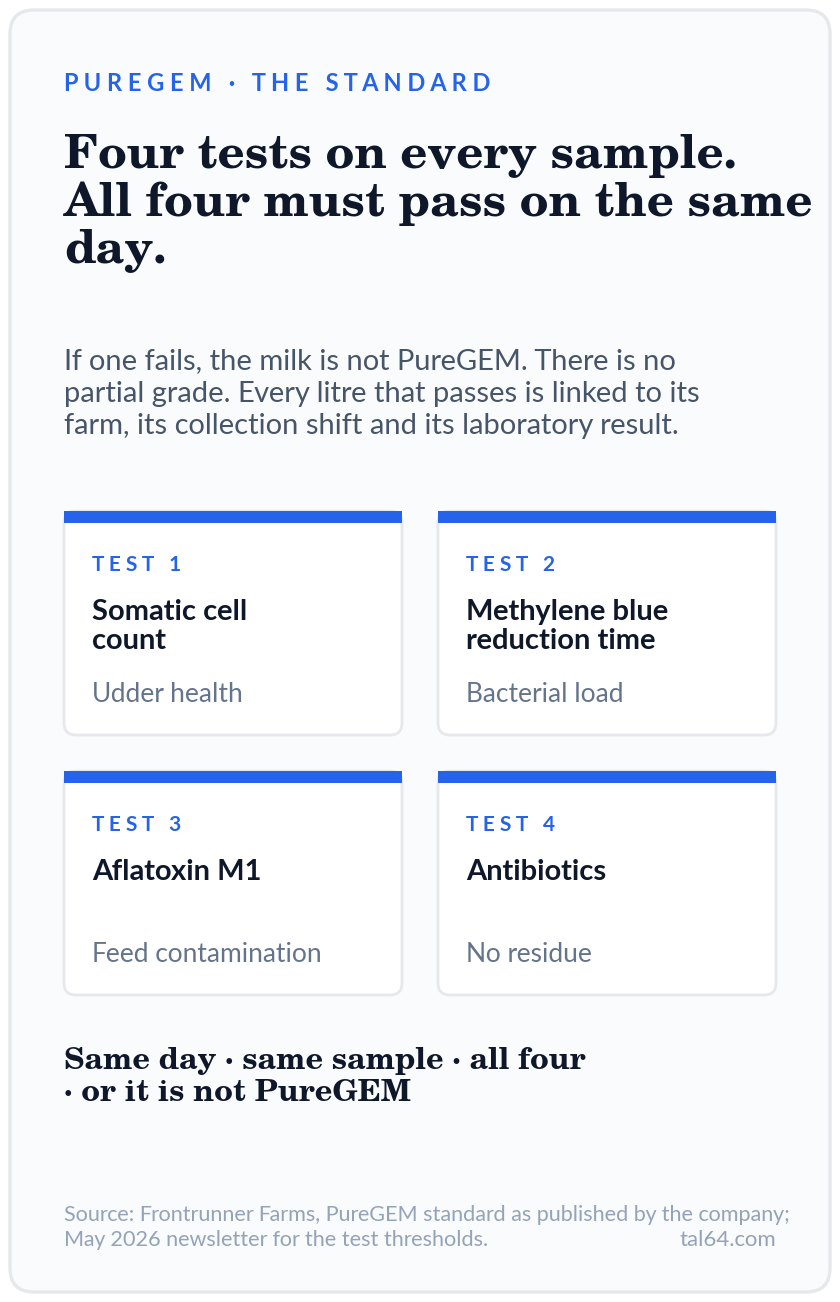
Its standard is called PureGEM. Four tests are run on every sample: somatic cell count, for udder health; methylene blue reduction time, for bacterial load; aflatoxin M1; and antibiotic residue. All four must pass on the same day’s milk. If one fails, the milk is not PureGEM, and there is no partial grade.
Every litre that passes is linked to its farm, its collection shift and its laboratory result, so a buyer can check where it came from.
Of the milk volume represented by the samples tested over the nine months, 14.5 percent qualified under a relaxed somatic-cell band, and 5.7 percent under the original strict specification. The rest could not be classified as PureGEM that day, because at least one test was missed. (Editor: the newsletter does not publish the two cell-count thresholds; to be confirmed with the founders.)
Antibiotic discipline improved over the period. The two tests that kept failing were aflatoxin, which comes from feed, and the bacterial count, which comes from hygiene and chilling. The figures describe these farms against PureGEM’s four tests together. They are not an estimate of how much Indian milk is unsafe.
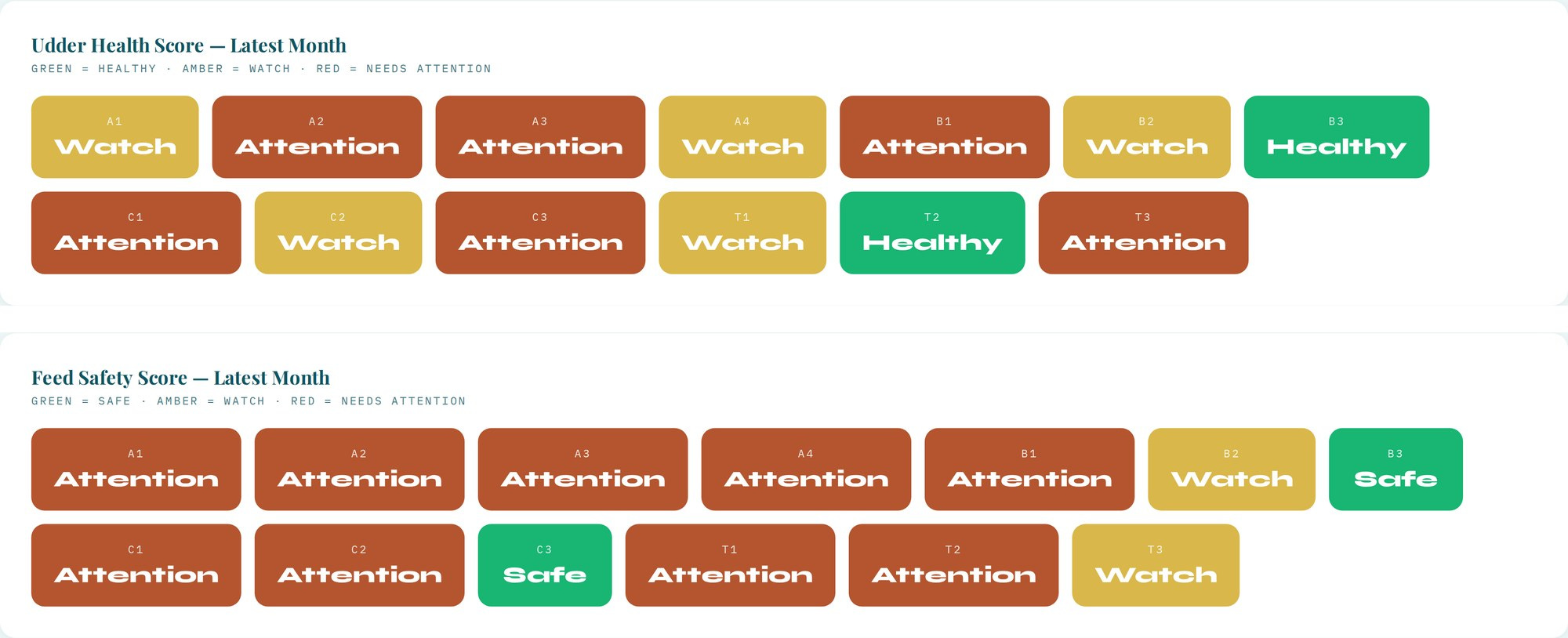
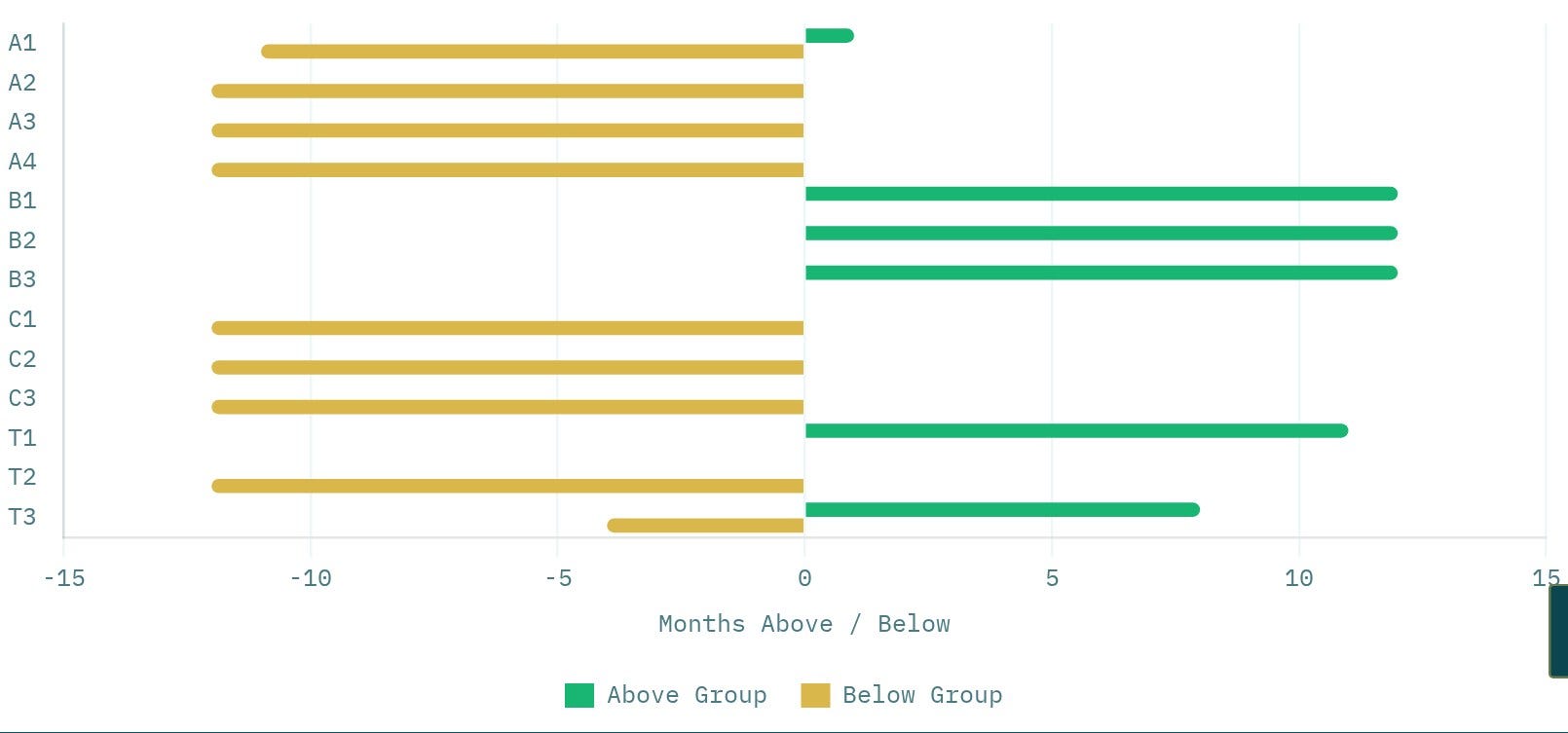
The dashboard shown at the launch, dated 28 March, is more specific. Of 2,356 daily cell-count readings across thirteen farms, 13 percent were below 400,000, the level the company treats as healthy, and 63 percent were above 600,000. Of 2,400 aflatoxin readings, 6 percent were below 200 parts per trillion and 51 percent were above 500, which is India’s legal limit for aflatoxin M1 in milk. The European limit is 50.
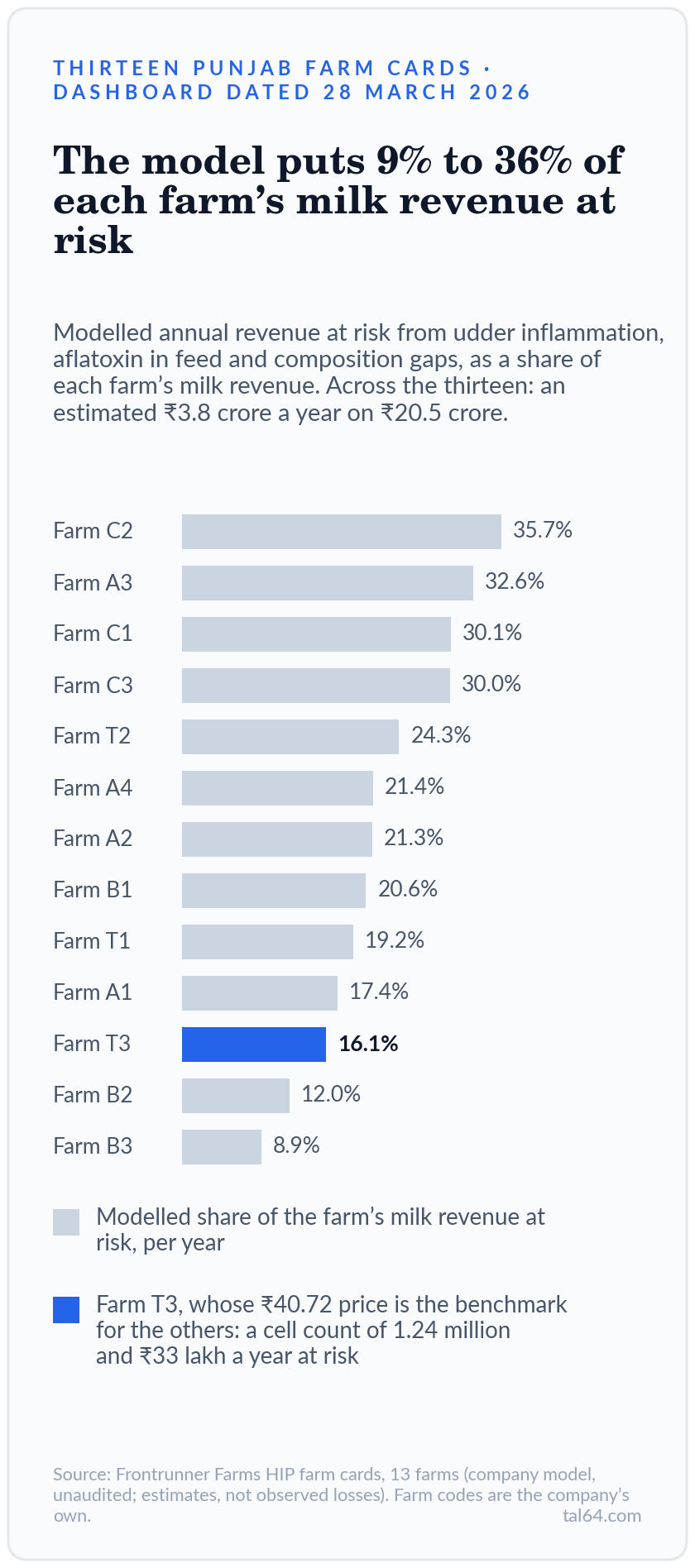
The same dashboard puts a modelled rupee figure on each farm. Across the thirteen, the model estimates ₹3.8 crore a year of milk revenue at risk on ₹20.5 crore, between 9 and 36 percent per farm. The farm at the top of the price table, whose ₹40.72 is the benchmark on every other farmer’s card, had a cell count of 1.24 million and an estimated ₹33 lakh a year at risk.
The FSSAI measured safety and adulteration on a pooled national sample, and its 5.7 percent counts only aflatoxin above the limit. Frontrunner tests udder health, bacteria, aflatoxin and antibiotic residues farm by farm, on professional herds, and finds that milk which passes the national standard still costs the farmer money. Pankaj:
“The limiting factor is government transparency about the quality of the milk being sold to the public. No systems have been built to address the problem—systems we see everywhere else in the world, and India doesn’t have. People make wild claims on labels, and nobody has the power to do anything about it.”
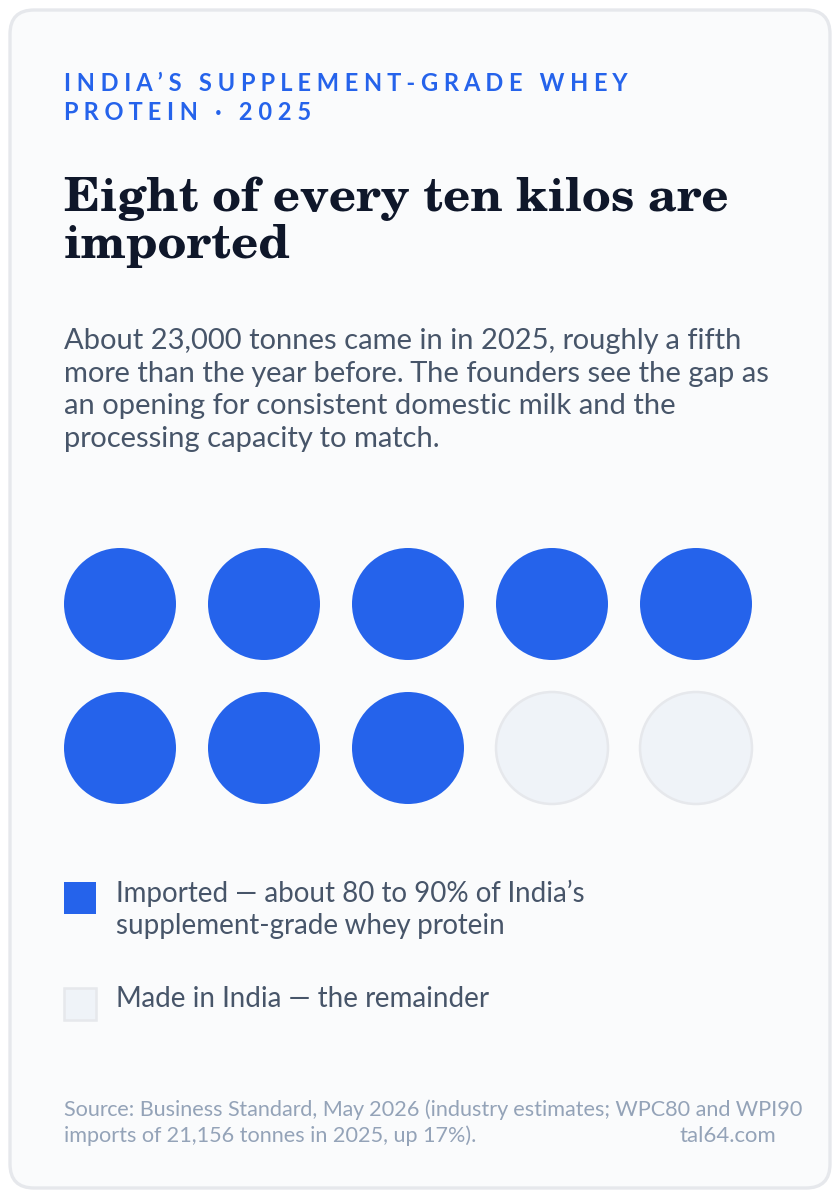
India produces more milk than any other country and imports most of its supplement-grade whey protein: about 23,000 tonnes in 2025, a fifth more than the year before. Whey is a by-product of cheese-making. The founders see room for Indian milk consistent enough to make such ingredients, and for the plants to make them.
“So most of the WPC 80 and WPC 90 is imported, and you will have heard that story. Importing a protein powder from France or New Zealand costs three times as much as producing it in India. And yet we do it, because nobody wants to get their hands dirty.”
(Editor: the import figures are from Business Standard, May 2026, which puts the imported share at 80 to 90 percent. The three-times cost figure is Pankaj’s.)
Nicholas says the processors take the shortcut.
“Domestic demand is so huge that people just buy it from Europe, because they can’t rely on Indian systems to produce it. Instead of doing the hard work required to fix the problem, everyone says: I will import it and pass it on to my customer, because my customer is upper-middle-class or better, and I’m only after that segment of the market. It’s a conscious decision by people who want to get ahead quickly: cut corners, and pass the shortcut on to the public.”
“It’s ridiculous. It’s 2026. Come on. We were able to do what we did for Covid in India—we were able to shut the whole country down. But we can’t clean up the milk. I don’t believe it.”
Clean milk is also cheaper to process.
“Say you’ve never cooked with a sharp knife in your life. You don’t know how much effort chopping garlic or dicing anything really takes, because you’ve always had the wrong tool. In the same way, there are many dairy processors in India who have no idea what would happen to their product if the knife were sharp. They don’t know, because they’ve never seen it.”
Somatic cells from mastitis change the milk.
“A lot of it comes down to the high somatic cell count in the milk—somatic cells being a by-product of mastitis and udder inflammation. There’s a flavour profile.”
“If you’re a large processor, you care, because the margin you’re losing to production inefficiency is huge. Ice cream is about fifty percent air. Holding that air requires a matrix, and that protein matrix is degraded by everything we’ve just discussed. If more than the right amount of milk went in, more milk was used than should have been.”
Nicholas puts the extra cheese yield from clean milk at nine to twelve percent. Cleaner milk processes better; how much better depends on the product and the plant. The founders’ point is that clean milk does not need a premium.
“It’s not that producing this milk costs more. It’s actually that producing this milk saves farmers money.”
The bottle of water
Pankaj’s father, a physician, was an early bottler of water.
“My father is a doctor, and he was the first to bottle water. He said: my patients are gone. Ever since people started drinking from the bottle, there are almost no cases of cholera and that kind of thing—because even the labouring class, the working class, is drinking from a water machine or a bottling plant now. He could see the correlation between clean water and gastric disease. He told me: you should have followed the trend. You should have set up a bottling plant when that was coming up.”
“In 1992, one of my friends bought a bottle of water and we ridiculed him. Bottled water existed then too. But people did not have the spare income, and they did not feel the risk. It is just a matter of time.”
His argument is that the value of clean milk is already there, and the market has no way to collect it.
“What we are doing is inevitable. We are building a middle layer for a market where the value already exists. It is just that it rests on a shallow base.”
Pankaj says the testing adds little to the cost of the milk.
“The cost structure doesn’t change. It is just that we charge for our services, about one rupee or one and a half rupees a litre, depending on how far we are sending the milk.”
“India is more than ready to pay for quality assurance. I see that everywhere.”
Cash talks
The milk pooling came first. The founders now describe it as the way to get taken seriously.
“It was a smart play, because we needed to be credible, and cash talks. If you’ve got enough money to buy thirty thousand litres of milk, you’ve got some change in your pocket. We needed that credibility. It was a good move.”
“But then we realised that having milk under observation was much more valuable to us, because it allows us to pick and choose the farmers we really want to develop, and to grade them, just like the milk. So we have Grade A, Grade B, Grade C. The Grade A farmers will need the least investment to get their milk to the quality we want—that’s the low-hanging fruit. Then there is the fruit in the middle. Then there is the fruit we need a ladder for.”
Milk under observation means a farmer has agreed to let Frontrunner sample and test his milk on a schedule. The farmer gets a running picture of his herd’s health. Frontrunner gets a map of where the clean milk in Punjab is.
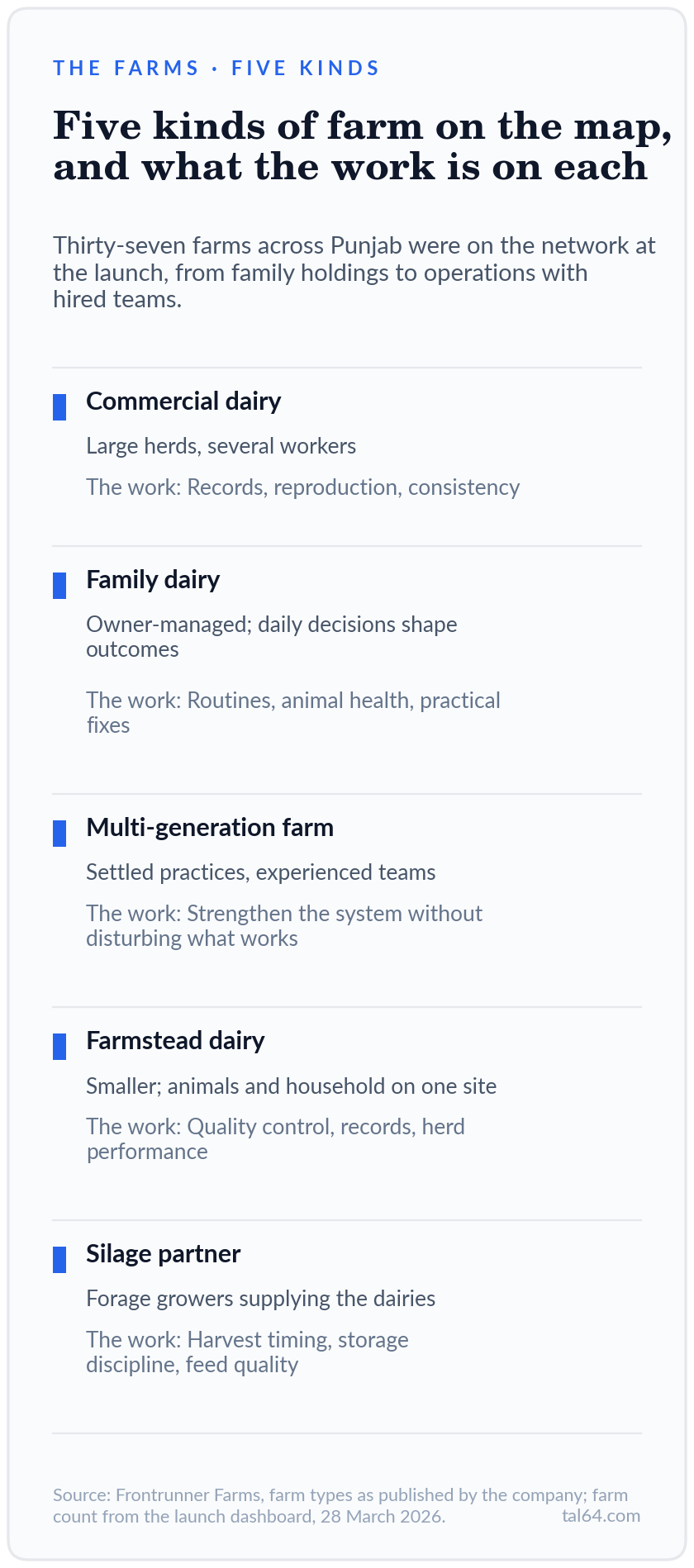
The company sorts the farms on that map into five kinds. Commercial dairies have large herds and hired workers, and the work there is records, reproduction and consistency. Family dairies are run by their owners, and the work is routines and animal health.
Multi-generation farms have settled practices and experienced staff, and the job is to strengthen the system without disturbing what already works. Farmsteads are smaller, with the animals and the household on one site, and the focus is quality control and herd performance. Silage partners grow the forage that feeds the others, and the work with them is harvest timing and storage.
“We’re already turning the wheel. That is what HIP is. HIP is the tool that lets us do this at scale, because remember, we’re being paid to do it. Farmers are paying us to monitor their milk. Depending on how much work it takes to move that milk from its current standard to Gem, we can give nudges on the phone, or visit once a month to build the relationship. The way you get the flywheel started is to get milk under observation and build the farmers’ trust. And we’re doing that very genuinely.”
(Editor: Gem is the founders’ shorthand for PureGEM, the four-test standard described above.)
Nicholas on what the map is worth:
“We can see more than sixty thousand litres every day. We know exactly where the clean milk is. We’re being paid to know where that clean milk is. We’re being paid to know where the highest-quality milk in India is.”
The company cannot deliver all sixty thousand litres on a given day; the map tells it which farms to work on first.
A large café operator has shown interest, on condition that the milk reach all its cafés, and supplying one quality at that scale is the hard part. With farmers, the founders recruit the respected ones first.
“What we do know is that you need acceptance from the farmers who are seen as successful. What marks them as successful might not be what Pankaj and I would call success—in a farmer’s mind, it is where they stand politically, what table they sit at. If those men are in, everyone follows. The quality of your early adopters determines your scale.”
Making the value visible
The launch slides set out the problem the pricing had to solve. A free programme gets no commitment from the farmer. Asking him to pay in full before he has seen a report stops him signing up, however sound the logic. Neither free nor fully paid works, the slide says.
At the launch, Pankaj described the pricing in tracks. (Editor: the prices and tier names below are as described in May 2026; the company’s current product schedule is to be confirmed before publication.)
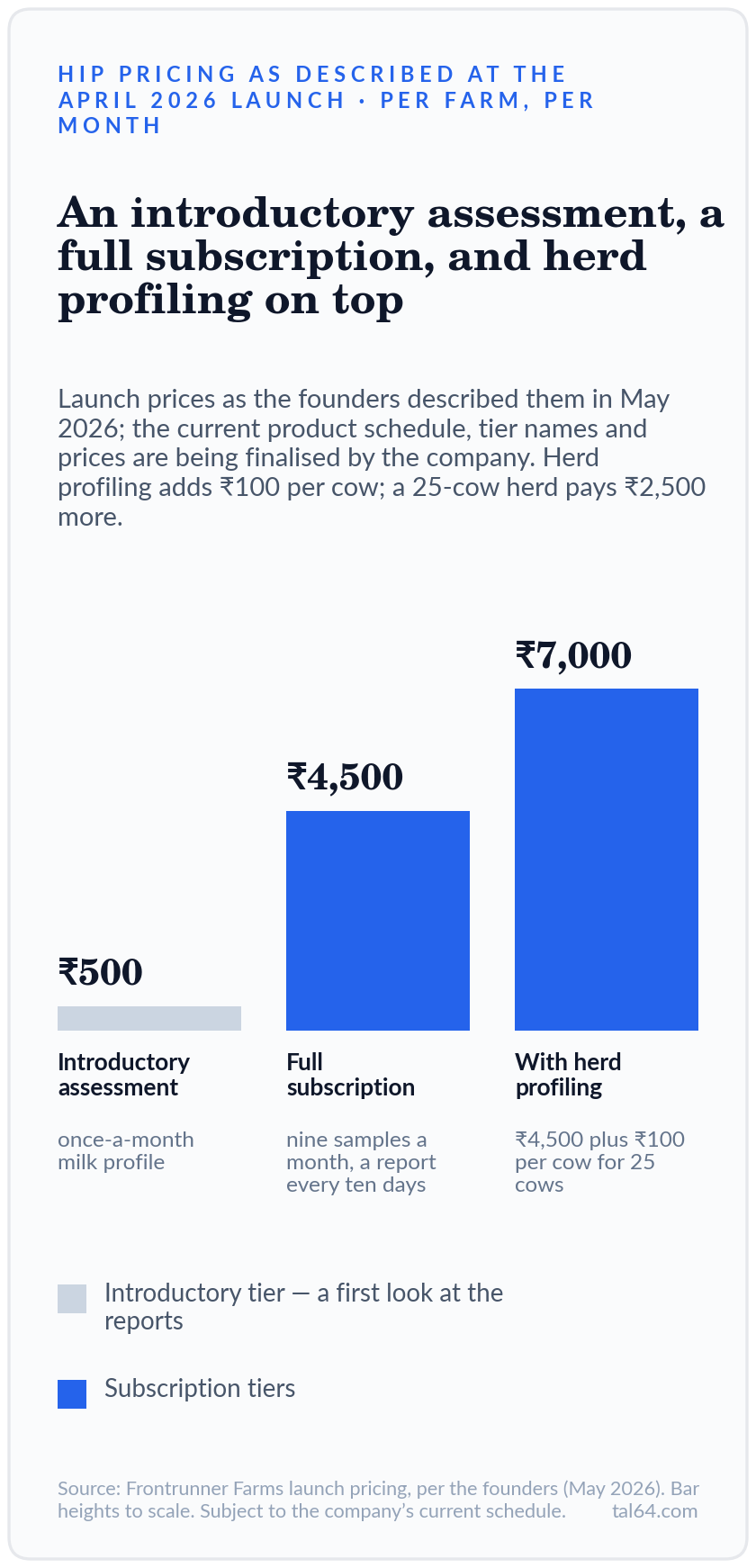
“This is a four-track programme. If you are a farmer and you just want to see how we report, you come to us once a month, pay ₹500, and we profile your milk. If you are worried about your herd’s health, I pick up your milk for sampling nine times a month, two or three times a week. Every ten days, three reports are generated, and I show you the trend: what is going on at your farm, how your milk volume is holding up against the weather, where you are losing. For that, you pay ₹4,500 a month.”
“Then suppose I move a farmer to the next stage: his udder health is really poor, and his feed is suspect. I ask him to test his feed, then to test his entire herd. Herd testing is ₹100 a cow. He has twenty-five cows, so he pays me ₹2,500 as well, while I am solving his udder problem.”
The ₹500 tier is an introductory assessment, a first look at the reports.
“₹500 a month lets you see that you need to pay ₹4,500 a month. It’s a taste.”
The add-ons follow the results. One of them is a culture and susceptibility survey of the herd: which bacteria are present, and which antibiotics they still respond to. Farmers who understand what that means ask for it. The reports arrive on schedule.
“We deliver those reports religiously. They come every time we say they will. And the farmers know that. They know they can rely on us.”
The company samples every three or four days because a change in feed takes that long to show in the milk.
“If you adjust the feed, it takes three or four days before you see the effect in the milk. So why test every day? But if farmers wanted it every day, we’d do it every day.”
The company describes the loop in five steps. A sampler visits nine times a month. Each sample is labelled, sealed and linked to the farm and the collection cycle, then goes to the laboratory under a chain of custody, where it is tested for composition, quality and contamination. The result is read against the farm’s own history, the programme’s thresholds and the other farms.
Two days after each ten-day window closes, a scorecard goes to the farmer on WhatsApp, each test marked red, amber or green, with one headline: the main weak link, and what to fix first. A return visit checks whether the fix held. A batch record travels with the milk.
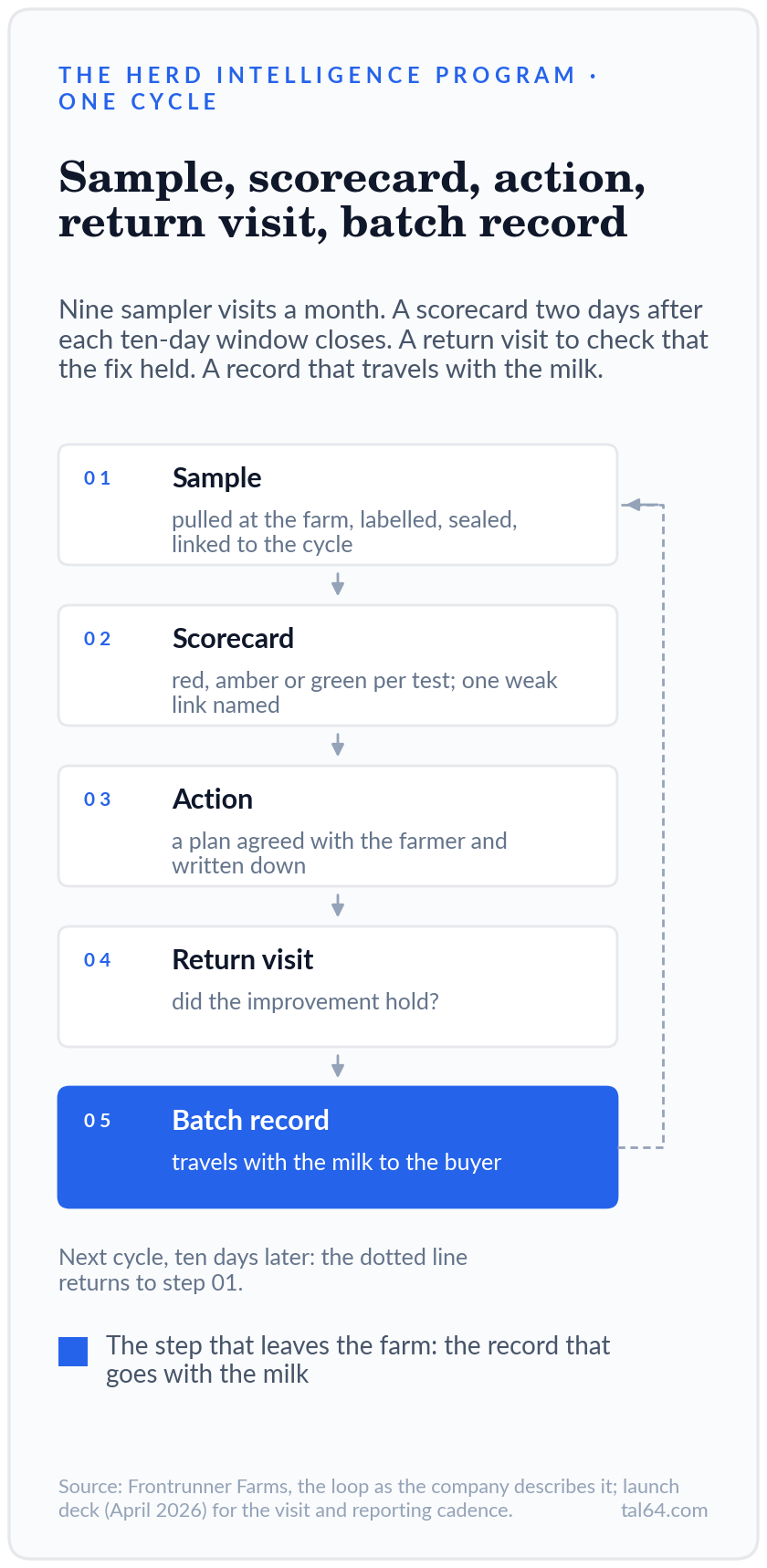
When a sample flags, a visit is scheduled. Milking routines, animal-health records, treatment logs and the separation of milk from treated animals are reviewed with the farmer. An action plan is agreed and written down, and the next sample shows whether it worked.
Three laboratories are in the chain: the partner’s for screening, the company’s own for farm-level testing and the certificates of analysis at the chilling centre, and the university’s for oversight and calibration.
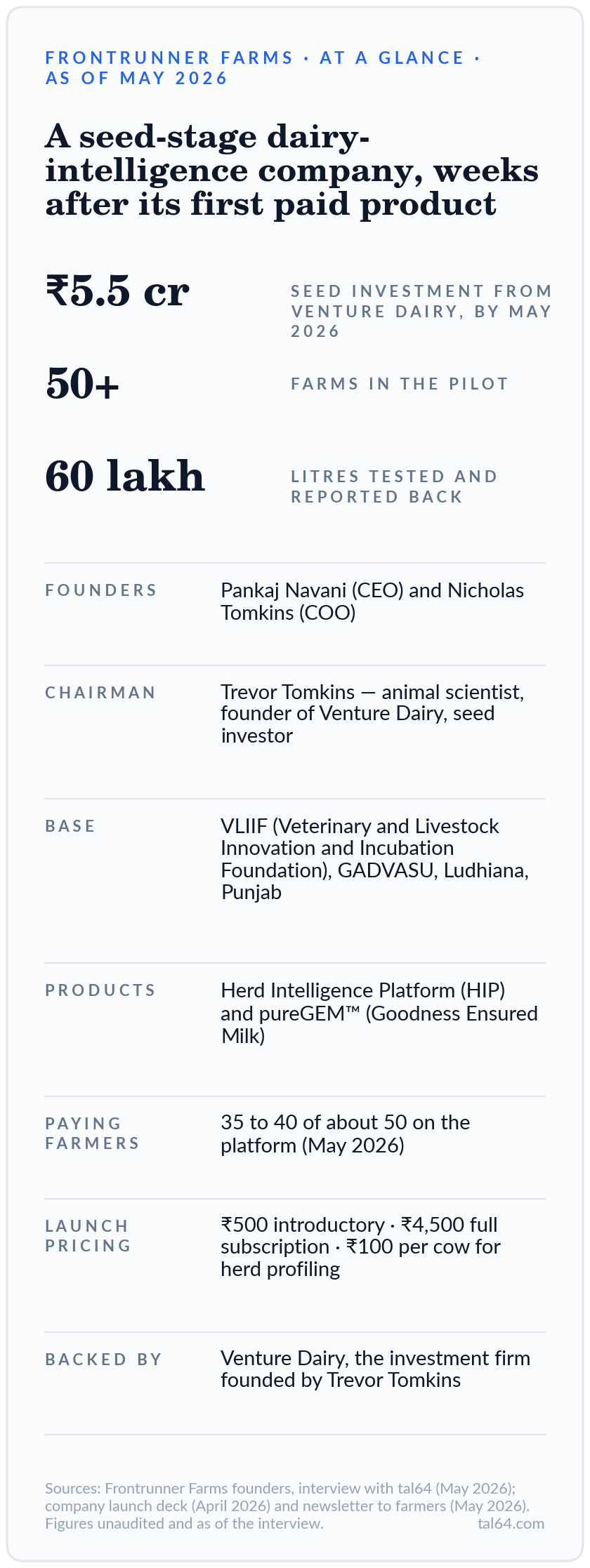
The tracks have names on the launch slides, Insight, Shield and Advantage, and the paid path opened to the pilot farms in June was called Foundation. Pankaj said the Advantage track will include an AI co-pilot.
The numbers are small. At the time of the May interview, about fifty farmers were on the platform, Frontrunner had until recently been sampling from twenty-six of them, and thirty-five to forty paid, counting the upsells. About twenty-five farms belonging to Frontrunner’s original partner were tested free for a year and have been taken off the sampling schedule while the two sides work out who pays.
“They’re hoping their partner will foot the bill, and we’re saying the same thing: why don’t you pay for this? We paid for it for a year, and you saw the benefit. Those are their farms. That’s their milk. We can never go and poach that. It would be like stealing from my neighbour. He would know, and it would create all kinds of problems.”
The free phase for those farms ended in May. In the newsletter that announced it, the founders wrote:
“What we have also learned is that the gap between a good day and a good week, every week, is wider than any of us assumed at the start. It is closed by steady testing, prompt feedback, and a partner walking the ground with you—not by occasional advice or one-off interventions.”
The company’s website puts the same idea in one line: good milk is a habit, not an event. The habit it asks for starts at half past four in the morning, with milking, cooling, feeding and animal checks. The afternoon is for reviewing feed, health, hygiene and records. The evening is for closing the records, checking the equipment and the second milking.
The paying farmers came to the company.
“The way this came about was that we were doing this anyway—it’s what you have to do to clean milk. We were doing it for a select group of farmers, and nobody else had access. Then other, extremely professional farmers, who don’t like that group, came to us and said: we really want access to this. We said: we’ll give it to you to prove the value. After two months we said: now we’re going to charge you. How much would you pay? And we went under the number they gave us. This was a pull. We didn’t go to farmers and say you should do this. Farmers came to us and said: how much can we pay you to get access to this system?”
Nicholas’s pitch to a farmer:
“Make more money.”
And how:
“Lose less revenue.”
The farmers also want to be seen to produce good milk.
“What these farmers ultimately want is for their efforts to be recognised. And even if that recognition is not a payment—if there’s a sign in front of your farm that says you produce the milk that keeps India safe and clean, that’s big, because no one else can get that badge of honour any other way. In the West you belong to an association, the association puts a banner on your farm, and that is pride.”
The banker’s five lakh
Because Frontrunner sees a farm’s volumes, quality and seasonal swings, it can see the farm’s cash flow, which no lender in India can easily see.
“Look at this farm—that’s a much bigger bell curve, which means this farmer is cycling through very different revenue conditions. He has big cash-flow problems at that trough. Now, as a lender, knowing when he is going to hit that crunch is very important in structuring his loan. The farmer doesn’t necessarily understand this, nor can he predict at what point in the repayment cycle he should be paying only the interest and when the principal should resume.”
The idea is to match a repayment schedule to that curve.
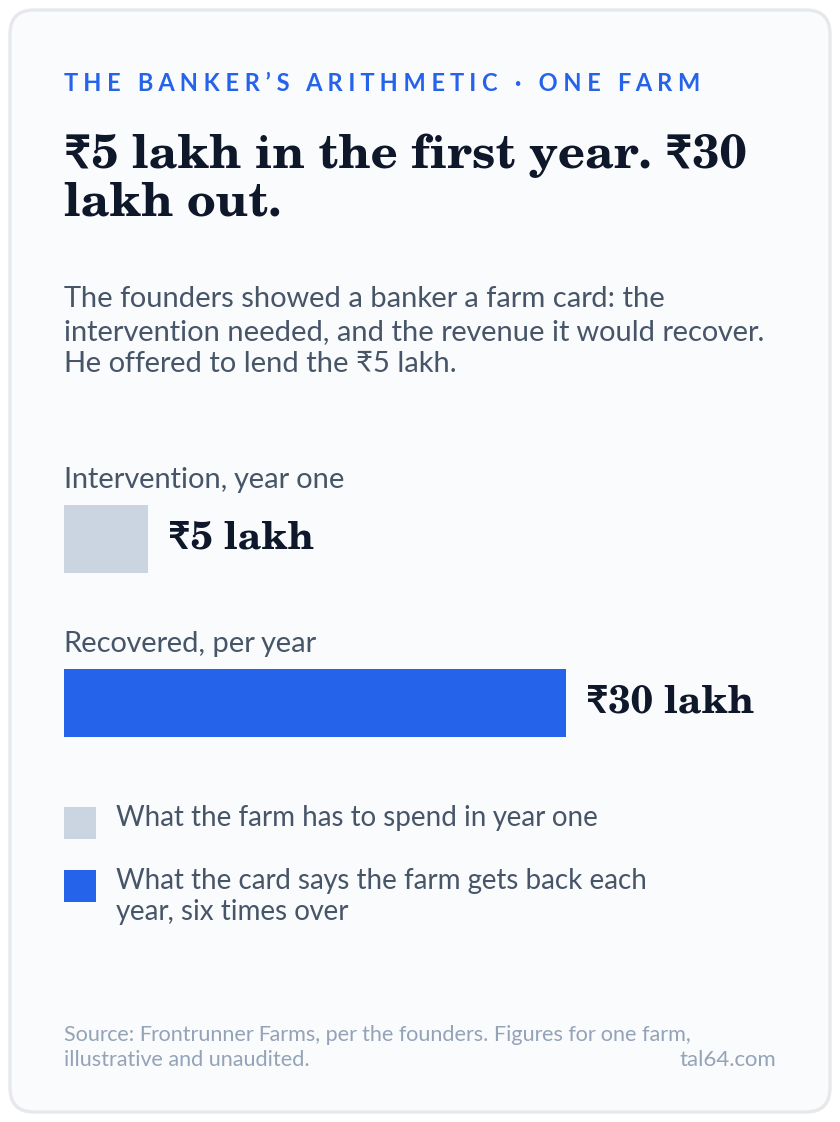
They took one farm’s numbers to a banker.
“We showed it to a banker. I said it needs five lakh rupees of intervention in the first year, and from the next year onward the farm pays for itself. He said: if the farmer has what it takes to achieve this thirty lakh, I am ready to put that five lakh rupees on the table.”
“This makes a farm far more bankable, because we have the access. They’re paying for testing, which means they’re engaged. We know what their volume is, we know whether they have the potential to improve, and we know by how much.”
A herd record kept over years could give a lender evidence about a farm that he does not have today, to set beside his own checks. The founders are not trying to become lenders.
Access to capital could become a reason farmers buy the product. Nicholas will not claim it before proving it.
“I have to prove that case. But it seems that most capital providers are not as agile as we are, or do not know the field as well.”
Underwriting the loans themselves is a different matter.
“We could go into financial services and add lending on top of this, but we would need to take on a whole other discipline. Significant risk.”
The record also gets richer with every sample.
“On the surface, this is just milk testing. But we are getting the whole trend—who is feeding what, when and how, and how it is affecting their cows.”
The dashboard is designed to show a farmer his scorecards, his trends over time, early warnings, a rupee figure for what quality is costing him, and where he stands against the other farms, unnamed. Individual reports are live; the comparative view is under development. The company says every screen is built around what the farmer should do next.
The founders say farmers who object to being ranked in public want to know the ranking in private.
“In public, farmers might not want to be compared with their neighbours. In private, all they want to know is how they stack up. This puts everybody on the same platform. You can see yourself, and you don’t know who anybody else is. You could collude with your neighbour and find out his code number. But everybody wants to log on every day, because you want to see whether you beat the man who has been beating you.”
The Herd Intelligence Program is the name for all of it: the sampling, the laboratory, the reports, the field visits and the ranking.
Velocity and voltage
The founders talk about velocity and voltage.
“Velocity is everything—and voltage. The Voltage Effect is my Bible. I introduced Pankaj to it, and then it became his Bible. We come back to it a lot, because we always ask ourselves: is this likely to result in a voltage drop? We’ve done okay. We’ve had a few power dips.”
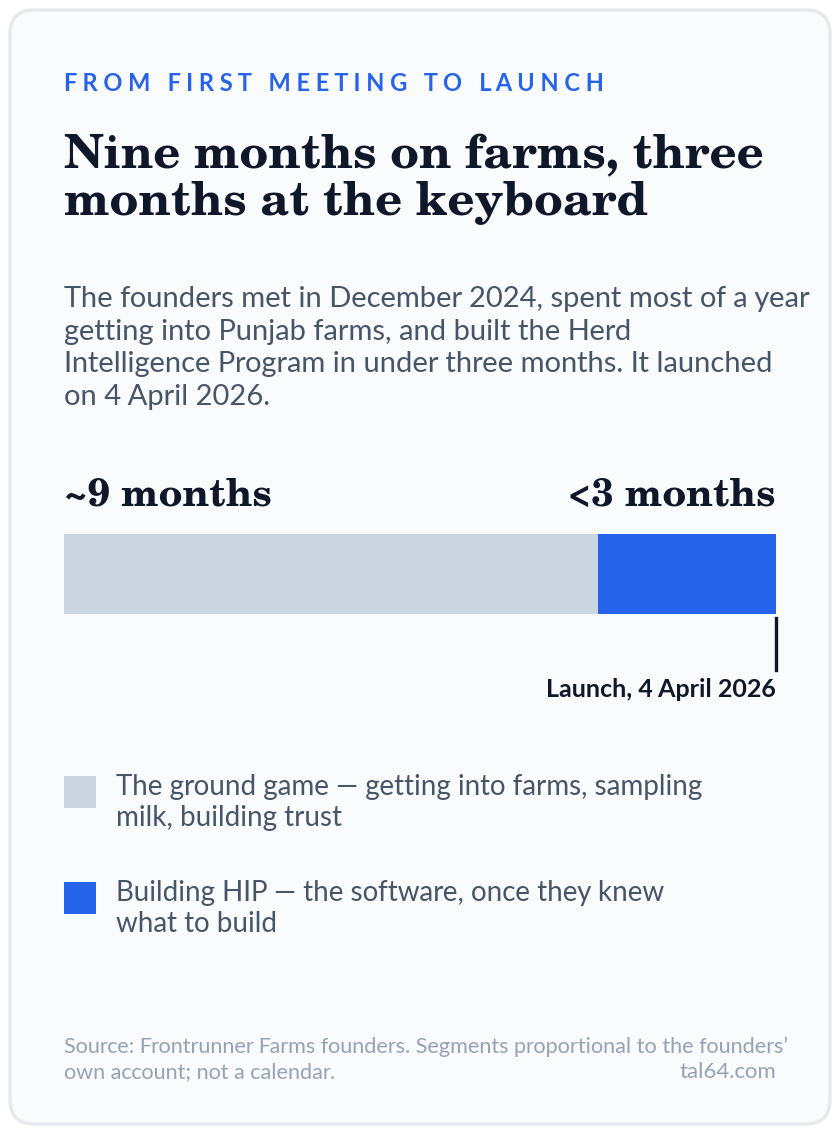
They spent most of a year on the farms and less than three months on the software.
“We spent nine months working out the ground game here and getting ourselves onto farms. It took us three months to build HIP—less than that. As soon as we knew what we wanted to do and why we needed to do it, we did it.”
About ₹5.5 crore of seed money from Venture Dairy had gone in by May, about $650,000, most of it working capital. They have been told they are spending too fast.
“Everyone thought we were crazy. We’ve been lectured by so many people: you’re burning all this money, you could be spending so much less. And my answer is: I wanted it done yesterday. We are not getting younger.”
“What gave me the confidence to do this is that I truly believe we are future-proofing the Indian dairy industry. This is going to happen. It has to happen.”
The job now is to do the same work on more farms. The founders’ note from late May sets out how. Testing alone does not pay enough, and advice with no buyer behind it is easy to ignore, so the company does all of it: testing, farm improvement, traceability, procurement and assurance for the buyer. Their summary: testing finds the risk, HIP changes the farm, PureGEM proves the milk, and procurement collects the value. Lending and an input marketplace, if they come, come after.
They know the idea can be copied.
“In India, copying is the sincerest form of flattery, and also the biggest threat to underfunded start-ups. If you had the right team and gave them a good budget and six months, they could rip this idea off quite easily. It’s not rocket science. It just took the specific application and the specific industry knowledge to put together. Once we go public with it, it won’t be hard for someone else to steal it.”
Their defence is the data they have collected, and a patent application they rate as a long shot. The May note is more specific: a list of parameters can be copied, and so can a report format; a farm’s test history, built up cycle after cycle, cannot.
“We have applied for a patent. A patent is difficult, because this is a process, we are basing our innovation on the model we have chosen, and the papers we refer to are public. But if we do get a patent around it, then we have every reason to put more money into it.”
Pankaj, on technology:
“What we do not want is to become a technical sideshow in a mainstream game. We don’t want to build technology for technology’s sake. We want to build technology that is relevant to farmers and gets adopted. Technology can be built overnight, and with AI you can do things much faster. The problem is building relevance, and adoption.”
The order of operations
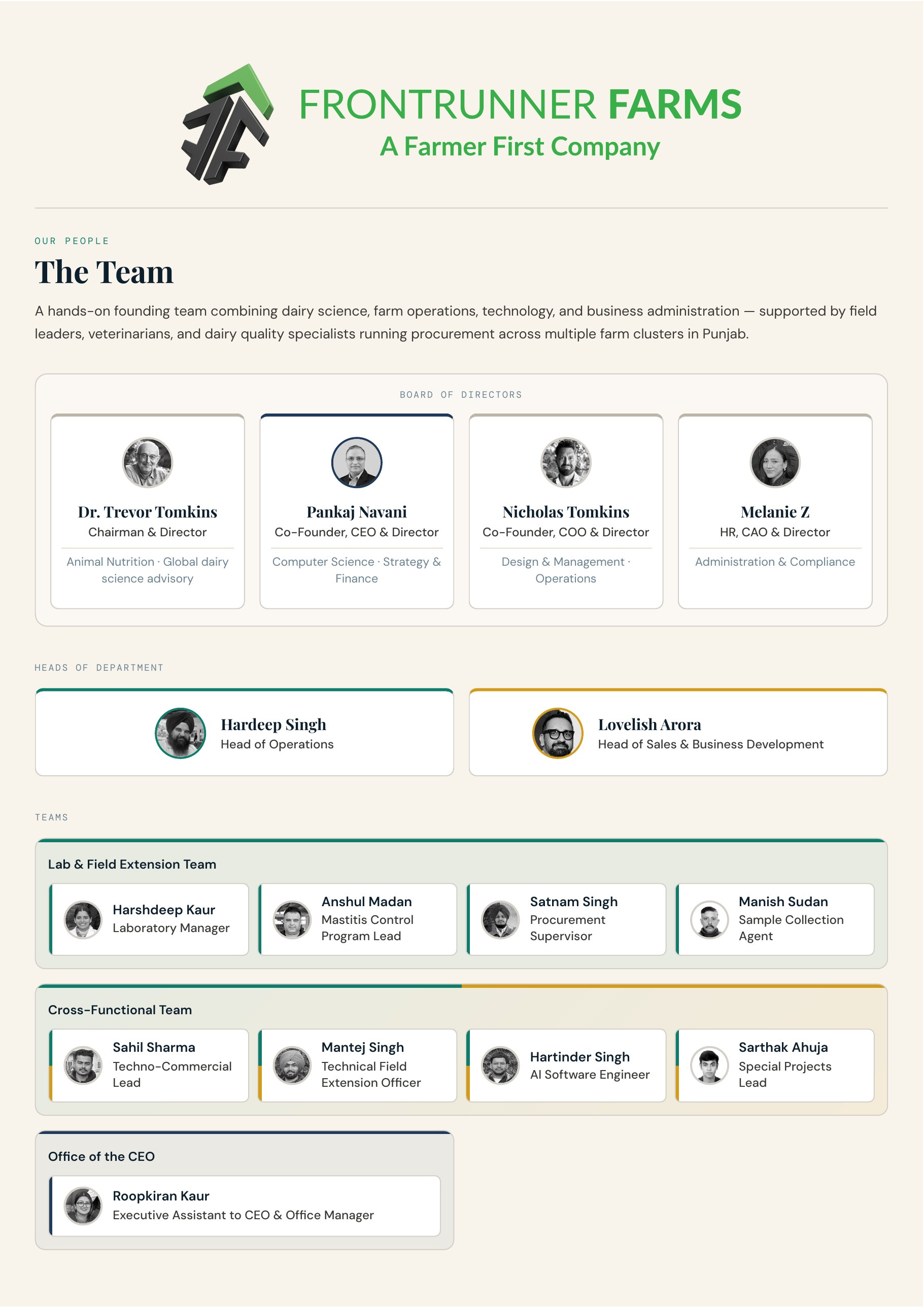
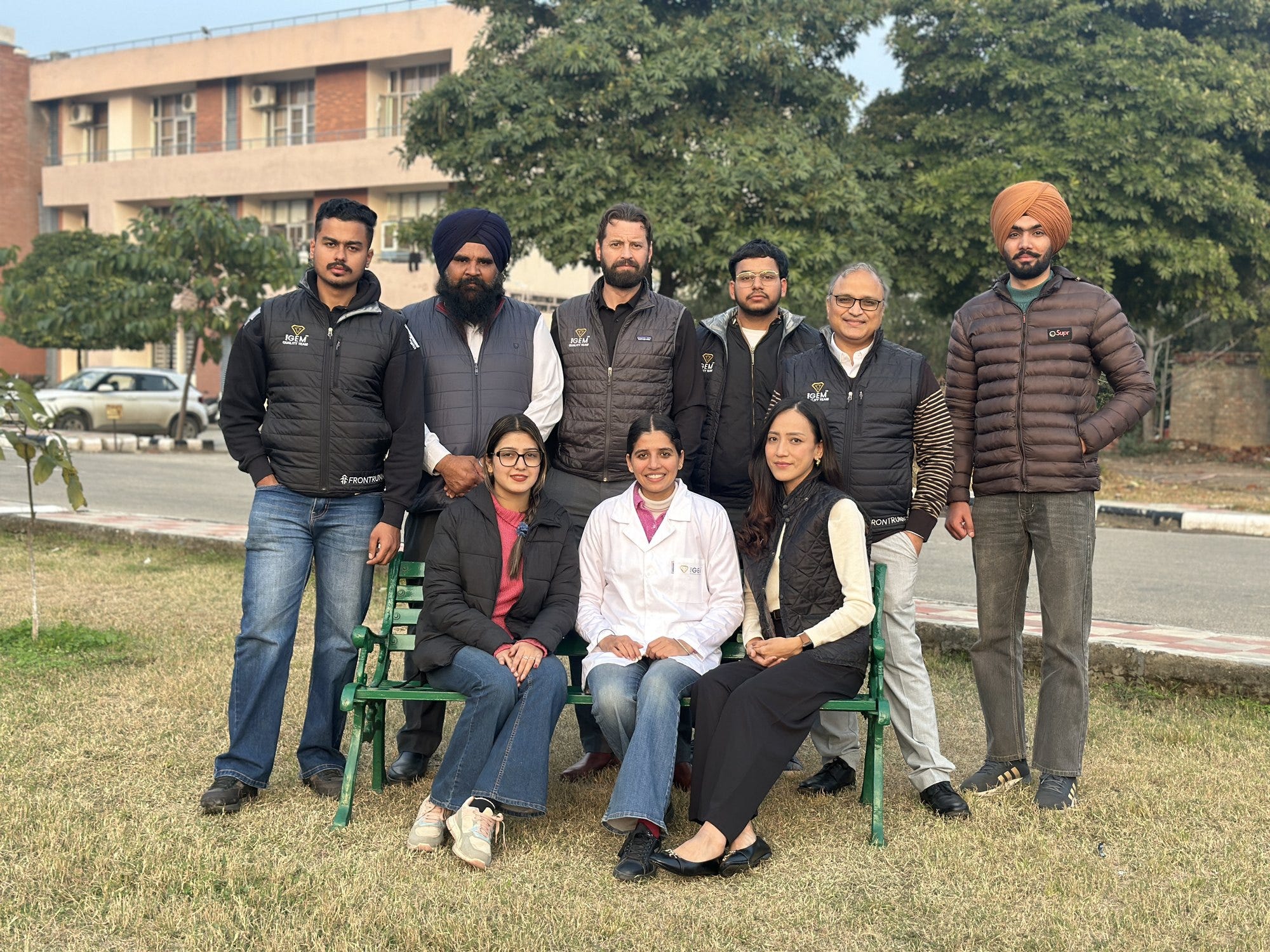
The launch deck lists four people at the top: Trevor Tomkins as chairman, Pankaj Navani as chief executive, Nicholas Tomkins as chief operating officer, and Melanie Hmar, who runs administration.
The dashboard, dated March, counts thirty-seven farms in the network and thirteen with a full run of laboratory data; about fifty were enrolled in the pilot by May.
The company’s chart as of October puts two department heads below the board, Hardeep Singh for operations and Lovelish Arora for sales and business development. Under them are a laboratory and field extension team of four, a cross-functional team of four, and an executive assistant in the office of the chief executive.
Hardeep Singh, whom everyone calls Sardar Ji, runs operations: workshops, farmer meetings, the next ten users. He worked in exchange and export before this and has a computing degree. At the launch he closed the day with a line to the farmers in Hindi: give us your milk, we will show you the truth and tell you what to do, and everything else is our responsibility.
The deck was a May snapshot; the one software engineer was an intern then, and there was no head of product. The October chart has the people who build HIP spread across the company: Hardeep Singh runs operations; Lovelish Arora runs sales and business development; Sahil Sharma works between the technical side and the commercial one; Mantej Singh does technical extension on the farms; Hartinder Singh is building the AI and the software; Sarthak Ahuja handles special projects.
The product is built by the people who sample the milk, run the laboratory, sign up the farmers and sell. The question they work on is what makes the next farmer understand the number, trust the advice, pay for the service and stay in the cycle. (Editor: the farm and capital figures in this article are as of the May 2026 interview and the April launch deck; the team is as of October. The founders say the second phase of the platform’s architecture is complete.)
How good the product is will decide what the company is worth. On an opportunity this size, the difference between an adequate product and an excellent one is worth hundreds of crores in valuation, and the measure of it is whether the next ten farmers sign up.
In May, the founders were still debating how to staff it.
“How do we recruit the best talent in the country to a place that is, arguably, not the nicest place in India to live? We can probably pay people fairly well. We definitely have some ownership on the table.”
Nicholas, on whether the money or the people come first:
“Pulling top talent like that into this organisation, when we’re undercapitalised and in a fairly intense market—do we raise money to bring in that talent? Or do we bring in a little of that talent and use it to raise the money to bring in more? I want somebody else to weigh in and say: strategically, this is the smartest way to play it. You’ve got this much cash left. Use some of it for an eleven-out-of-ten product team for the next two months. Use some of it to hire an eleven-out-of-ten person who can focus every day on ten more farms. Or do we take what we have and say: to blow this up, we need to raise another ten crore?”
They chose something in between: build around the field team first, and keep the cash for the work.
“Right now we have the capital committed to execute this year’s budget, plus some, because we’ve changed an operating agreement and we now have a revenue stream that wasn’t predicted. So we’re good to go. But we don’t have enough in the budget for an eleven-out-of-ten product development team. We have equity that can be bartered as part of that.”
The 2010 to 2020 generation of Indian technology founders left behind a record, including the companies that did not last, and a pool of people who have built products for rural India. Founders starting now can hire from it.
Nicholas wants software to do the hand-holding: a voice assistant that answers a farmer in his own language and shows him, on request, how he is doing against the man next door. For now Frontrunner works with farms that have the equipment and the management to act on a result. The plan is to get those farms producing more, and more consistently, before going wider.
“We came to Punjab because this is as close as we’re going to get to Western standards of professionalism—and still there’s a huge gap, and we’re closing it.”
“Our model is not to scale by sending more people to smaller and smaller farms. It’s to encourage farmers to grow larger and larger herds that are managed properly, and whose growth we can finance, because they’re stable businesses.”
Refrigeration is the first thing the company has started to supply. Selected farms now have leased bulk milk coolers on site, which lets them milk three times a day instead of twice; the May newsletter reports volume gains of up to about 15 percent on those farms.
That is Trevor’s argument, fewer animals fed properly, on one farm at a time.
One of the plateaus
Nicholas, on what comes after HIP:
“I don’t know that this is the pinnacle for us. I think this is one of the plateaus along the way. Because at the end of the day, if we don’t see this all the way through to the finished good—if Gem doesn’t become an ingredient that dominates the milk scene in India—then all of this was for nothing, even though we have improved farmers’ livelihoods along the way. The ultimate goal is to give Indians democratic access to clean food.”
They do not say that to investors.
“We cannot say that. But you should know that it’s at the back of our minds.”
An investor who backs Frontrunner now is putting in money for five to seven years. The founders’ aim, clean milk at the ordinary price across India, is consistent with that.
They will not expand before finishing the first cycle in Punjab.
“We already have invitations from Rajasthan and Maharashtra. But we want to run a full cycle here first.”
The founders’ May note says the pilot proved the science and the next phase has to prove the economics.
Pankaj, on getting from fifty farmers to a thousand:
“Not marketing in the usual sense. Meeting farmers. Doing workshops. Doing all the outreach programmes.”
“It’s possible in a year, with caveats. We will not get that far without the blessing of the farmers’ association, and to get that endorsement they need to see a signal from the market that this is worth doing, because at first this will always feel like an extra cost and more work. It takes several years of proper management for a farm to reach the steady state that is normal on Western farms. The signal doesn’t have to be big, and it doesn’t have to be money. It just has to be that somebody recognises that this milk is better than anyone else’s.”
These farmers want their work recognised.
The founders have said little in public for a year.
“We have deliberately kept this as a skunkworks, because too many people knowing about it now doesn’t help us. We’ve kept our heads down and made sure that what we’re doing, selling and putting together is real, can be reproduced and can scale. A lot of start-ups in India build a really nice website and make a lot of promises, and none of it is true. This is the opposite. This is a hundred percent real. It’s a hundred percent executed, right now. And it’s ready to scale. We just need to build the team.”
Pankaj’s own description of what they are building:
“What we are weaving is trust. What is ultimately missing in Indian farming is trusted input providers. We’re not in input sales yet. But if you have the farmer’s trust, and it’s well earned, then the sky is the limit in what you can bring onto farms. And we don’t want to push—because that’s what everybody else did.”
The company is meant to pay for itself, with the university as its incubator and scientific partner. What it has after a year is a record of each farm’s milk, kept because the farmer pays for it.
“In a sense, we are inventing a new way to value a farmer.”
The next five to seven years, if the order holds, are the same work on a thousand farms.
Milk, Pankaj says, is the elixir of life. The founders want tested milk sold at the ordinary price, everywhere in India.
If you want to discuss an opportunity with Frontrunner Farms, please write to us at banjan@tal64.com.
Safe Harbour Statement. This article is for informational purposes only and does not constitute investment advice, an offer, or a solicitation to buy or sell any security or interest. Frontrunner Farms is an early-stage, privately held company. The figures, metrics, and projections described here were provided by the founders or drawn from third-party sources; they have not been independently audited and are subject to change. Early-stage ventures carry substantial risk, including the risk of total loss. Forward-looking statements reflect the founders’ current expectations and are not guarantees of future performance. Readers should conduct their own due diligence and consult their own advisers before making any decision.
This story is based on extensive interviews with Pankaj Navani and Nicholas Tomkins, co-founders of Frontrunner Farms, and on company documents they shared: the Herd Intelligence Program launch deck (April 2026), the company’s May 2026 newsletter to its farmers, and a briefing note prepared for tal64. This is NOT a paid article.